Serving Plantation, FL & nearby
(954) 459-3987
Plantation, FL

Why Parkland's Newer Garage Doors Break Differently

Parkland homes date from 2005, newer than most of our service area. See why that changes spring and opener failures, and how we respond from Plantation.

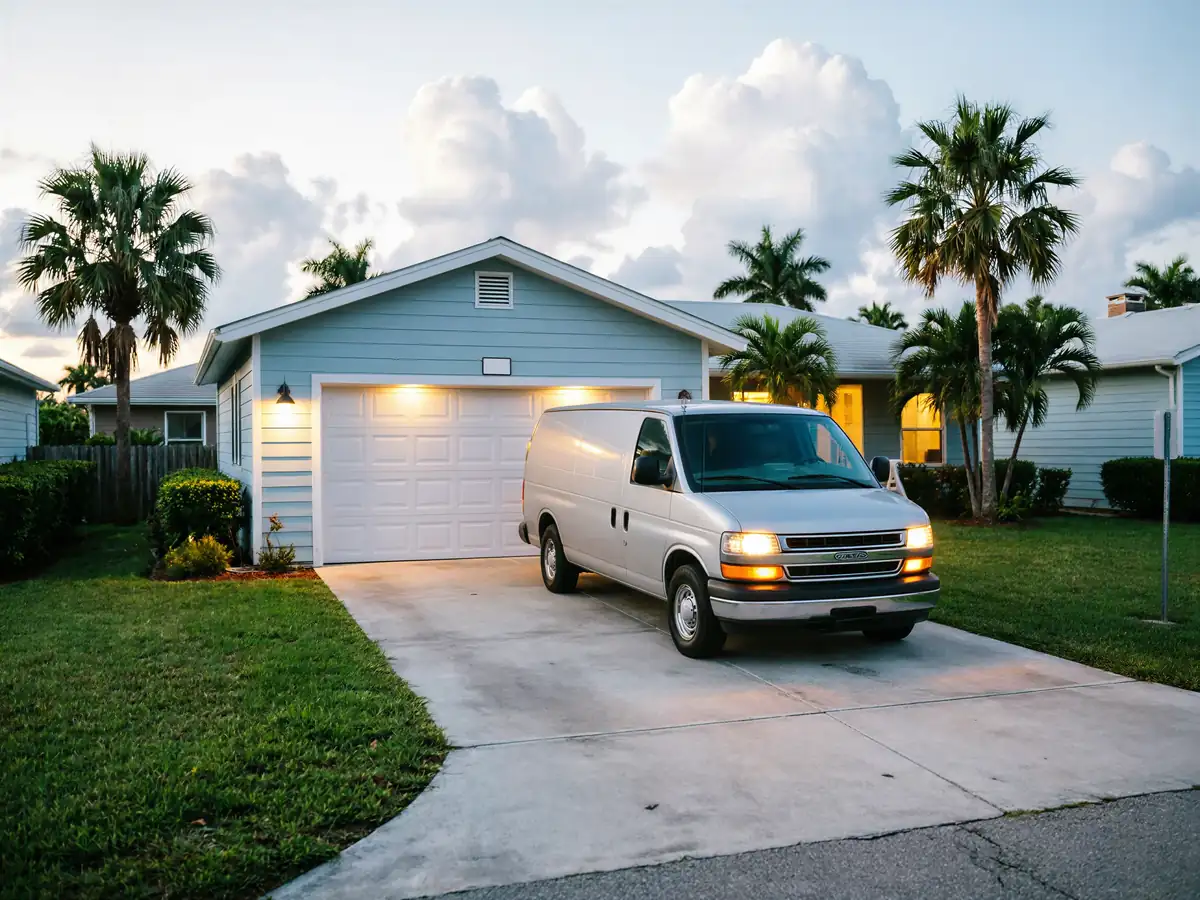
A white service van is parked in a driveway in front of a house with a white garage door.
Plantation, FL
8 services
6 service areas
Diagnosis first, then the fix

The DIY Question

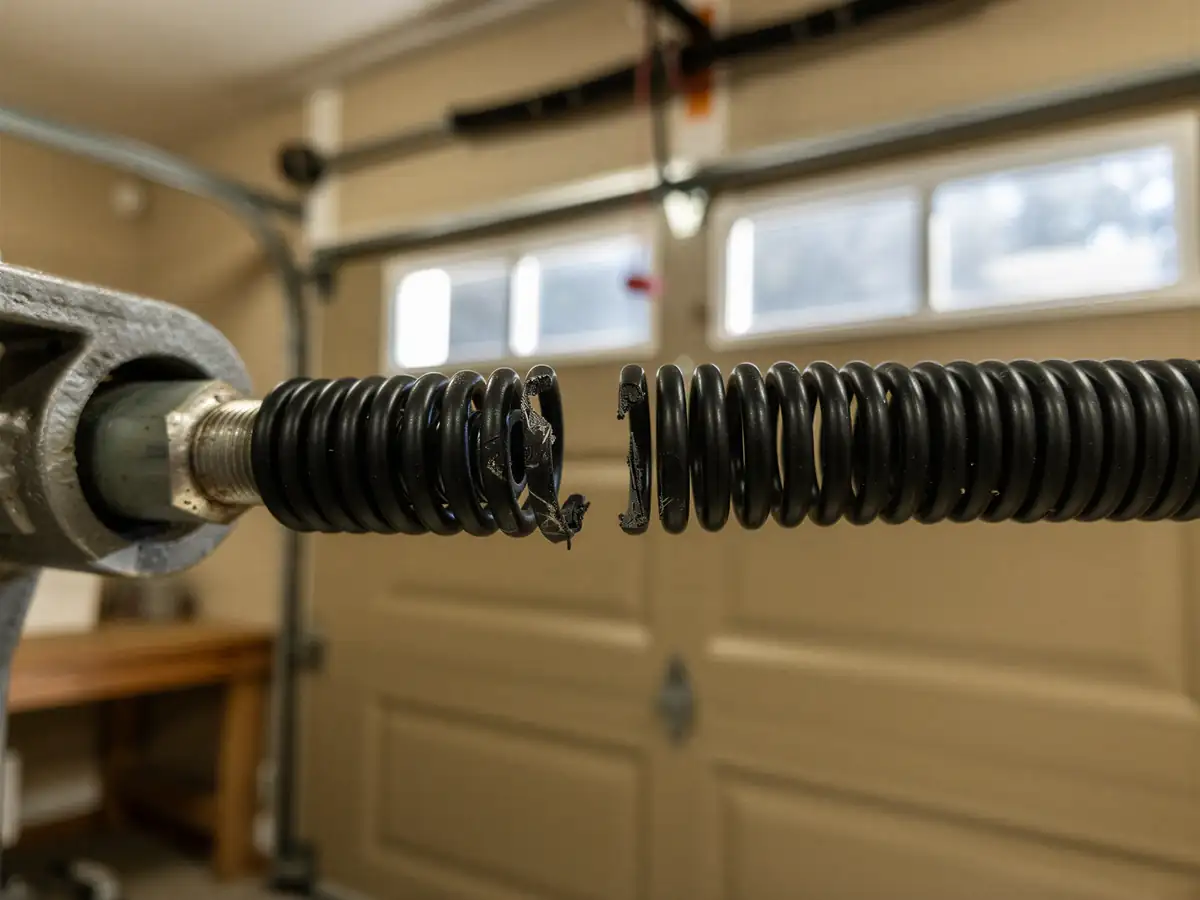
Most houses in Parkland went up around 2005, thirty years newer than the 1975 median across the rest of the service area we cover from Plantation. That gap matters more than it sounds. A house built in 2005 almost always came with a factory-installed steel insulated door and a belt or chain opener running on a circuit board with rolling-code remotes and photo-eye sensors, not the bare hardware and simple chain drives you find on older stock nearby. So when a Parkland door won't close, the fix is just as often a blocked photo eye or a remote that needs reprogramming as it is a mechanical failure. That part you can usually sort yourself: wipe the sensor lenses, check they're aimed at each other, and try reprogramming the remote from the opener's manual. What you should not touch is the torsion spring, regardless of how new the house is. A wound spring on a heavier insulated door carries more stored tension than people expect, and that doesn't change with the build year. If the door won't budge, or a spring has visibly separated, that's a call for us, not a weekend project.

How We Fix It

We run out of Plantation, and Parkland sits about 14 miles from there, so every call starts with a drive, not a dispatch from a local depot. Once we're on site, the first step is figuring out whether the fault is mechanical or electronic, because on a house this age it's genuinely a toss-up. We check the opener's logic board and photo-eye wiring before we ever touch a spring, since misdiagnosing a sensor fault as a spring problem means replacing a part that didn't need it. For mechanical failures, we match spring and cable gauge to the actual door weight rather than assuming an older, lighter spec, since insulated doors common in homes built this decade run heavier than the hollow steel doors on older housing stock. We carry common torsion spring sizes and standard opener boards on the truck, but we don't promise a same-day fix for every opener model. Some newer circuit boards are specific to a manufacturer and aren't something we stock, and we'll tell you straight if that's the part you need.

Why This Fails Locally

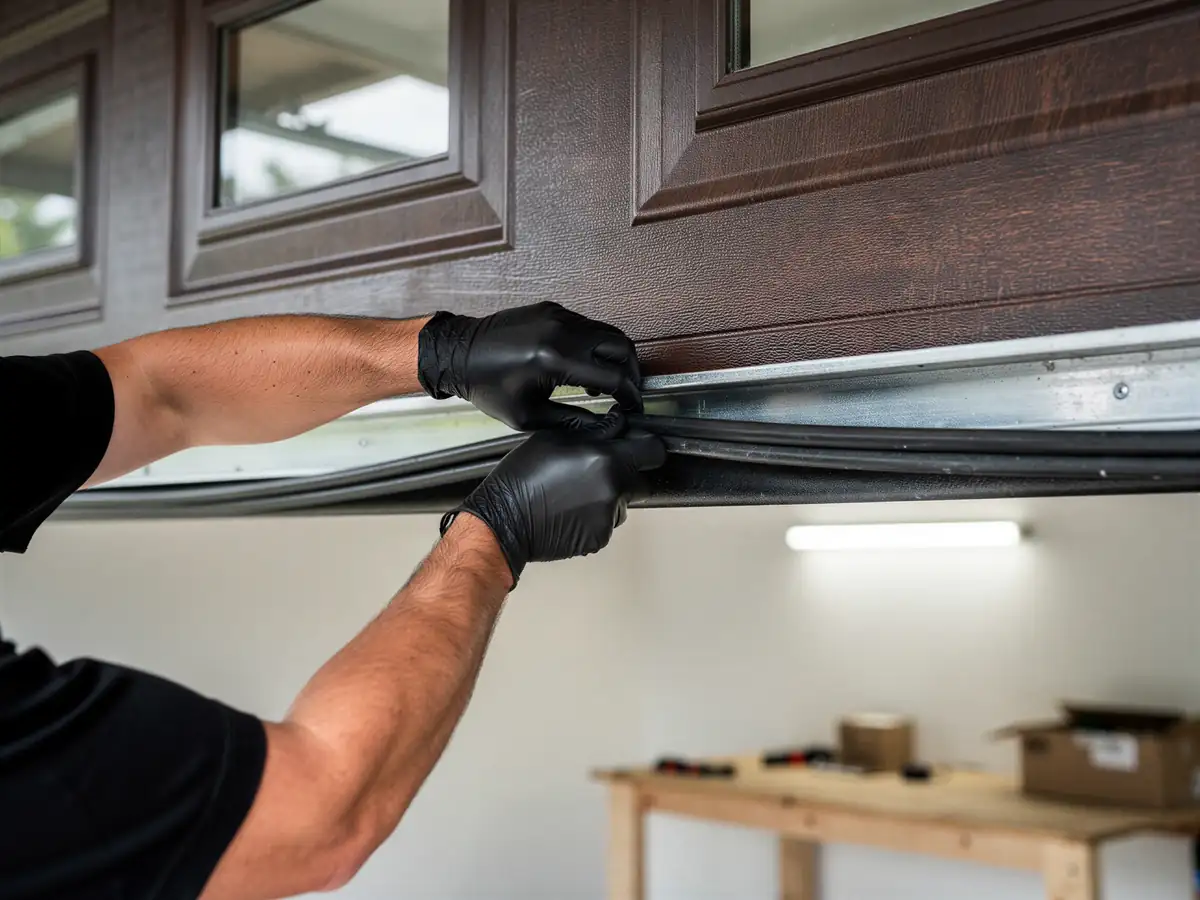
The climate here sits in a mild temperate band, which is kinder to garage door hardware than a lot of the country gets, but it isn't nothing. Humidity still finds its way into photo-eye housings and opener circuit boards, and on newer builds those electronic parts are exactly what fails first, not the door panel itself. Steel insulated doors, standard on construction from this era, hold up well against the weather, but the foam-core sandwich construction means a direct impact dents both skins at once instead of just denting a thin single panel, so a ding that would be cosmetic on an older hollow door can crack the inner liner here. Weatherstripping at the bottom of the door also degrades the same way everywhere in this climate band, letting water in and triggering the same photo-eye corrosion issue mentioned above. None of this is dramatic weather damage, there's no storm event to point to, it's slow and electrical rather than sudden and mechanical, and that's exactly why it gets missed until the door stops responding altogether.

What Can Go Wrong

On a heavier insulated door, a broken torsion spring is the big one; the extra weight means more stored tension in the coil, and a snapped spring on one of these doors will drop faster and harder than it would on an older, lighter panel. Opener logic boards fail outright sometimes, usually showing as a dead keypad or a motor that hums but won't lift. Misaligned or corroded photo-eye sensors are probably the single most common call here, since the door reverses or refuses to close and the owner assumes it's a spring when it's really a $20 sensor. Cables can fray at the drum on either generation of door, that one isn't tied to build year. Rollers wear out eventually on any door, insulated or not. The one failure we see less of here than on older stock is bent track from decades of minor misalignment, simply because these doors haven't had as many years to drift out of adjustment yet.

How Long It Takes

A straightforward job, resetting a photo eye, swapping a standard torsion spring, replacing a worn cable, usually wraps up in a single visit once we're on site. Where it slows down is parts. If the fault turns out to be a manufacturer-specific logic board rather than something universal, we may need to order it, and we won't pretend otherwise just to sound faster. We also won't quote a response window here, since we're traveling from Plantation and traffic on any given day changes that more than anything about the job itself. What we can tell you is that diagnosis itself doesn't take long: checking sensor alignment and opener wiring against spring and cable condition usually sorts out which category your repair falls into within the first few minutes on site, and that tells you whether you're looking at a same-visit fix or a part we need to come back with.
How it works

From “it’s stuck” to “it’s fixed”

  1. 1
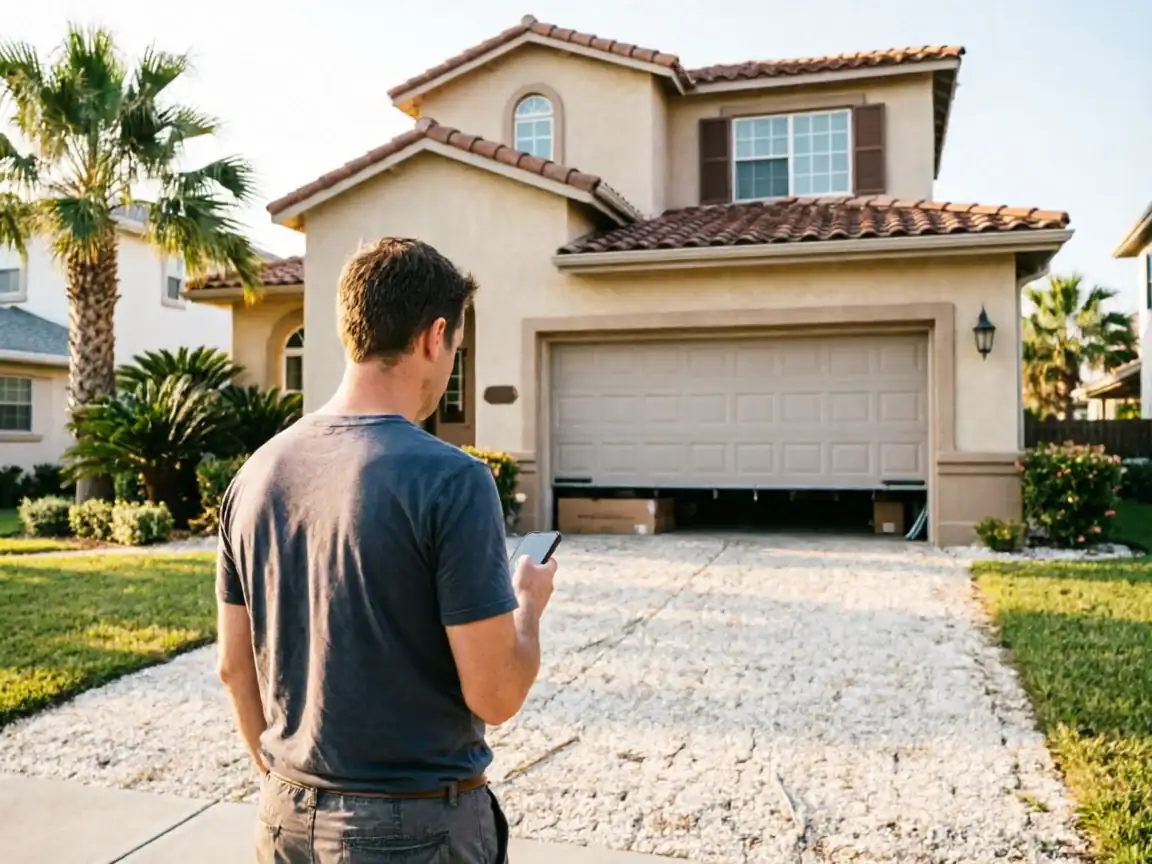
    A man stands in a driveway looking at his phone, with a partially open garage door behind him.

    Tell us what’s wrong

    Describe the symptom - won’t open, loud bang, opener runs but the door won’t move.

  2. 2
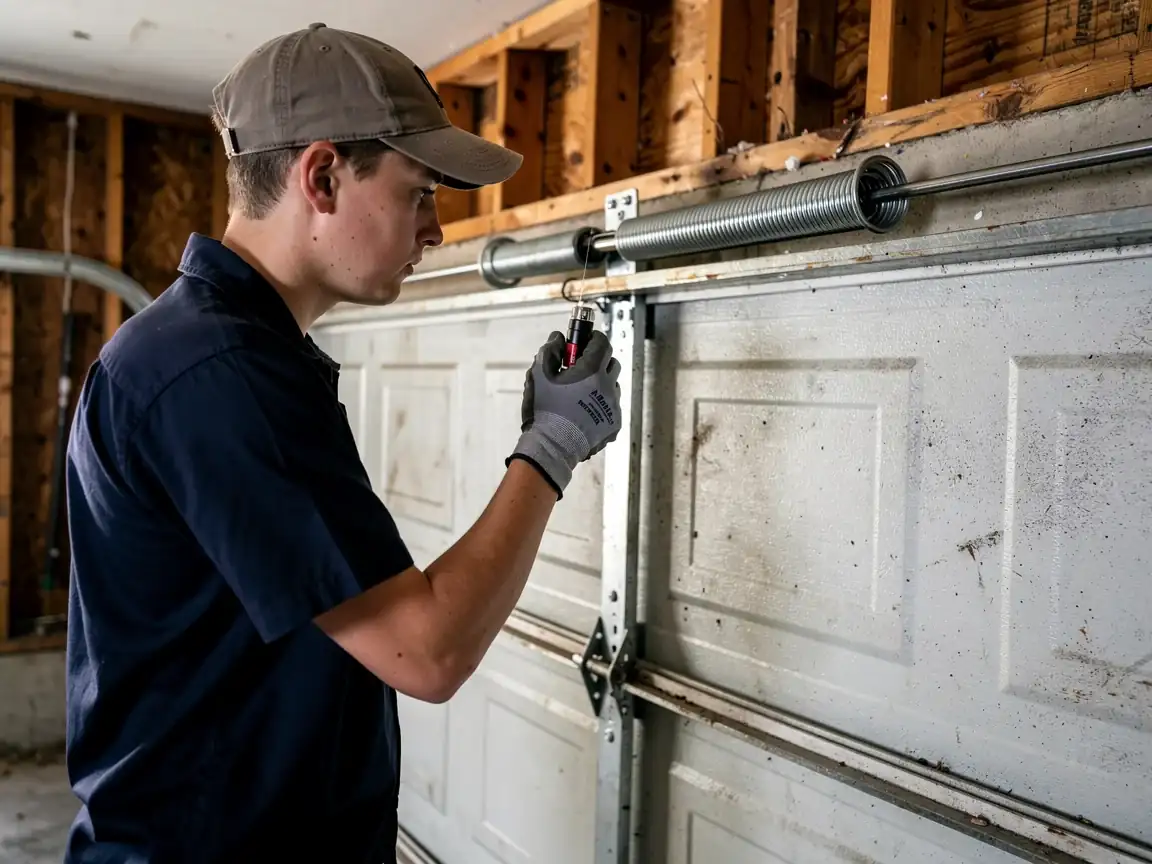
    A technician in a cap and gloves works on a garage door torsion spring.

    On-site diagnosis

    A technician tests the door under power and by hand and finds what actually failed.

  3. 3
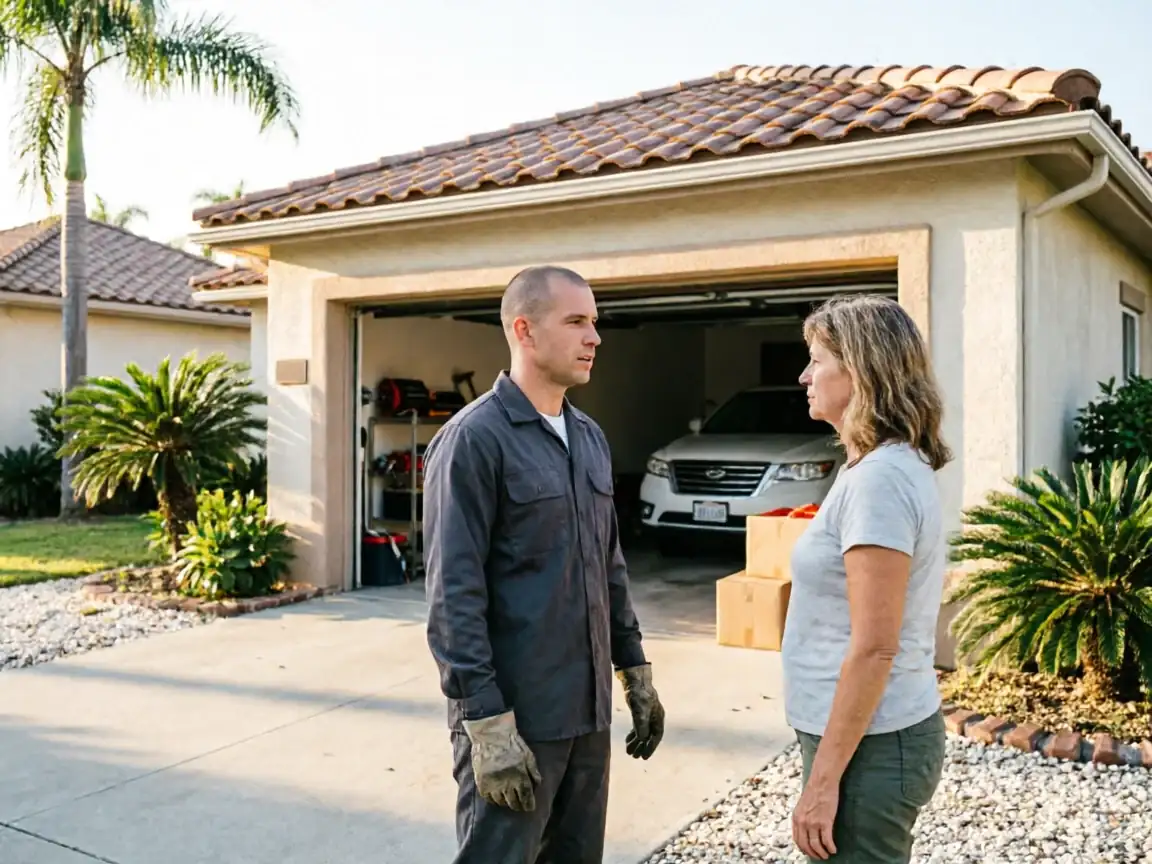
    A technician and a woman stand in a driveway in front of an open garage.

    Clear, up-front plan

    You get the fix that’s needed and what drives the cost - before any work starts.

  4. 4
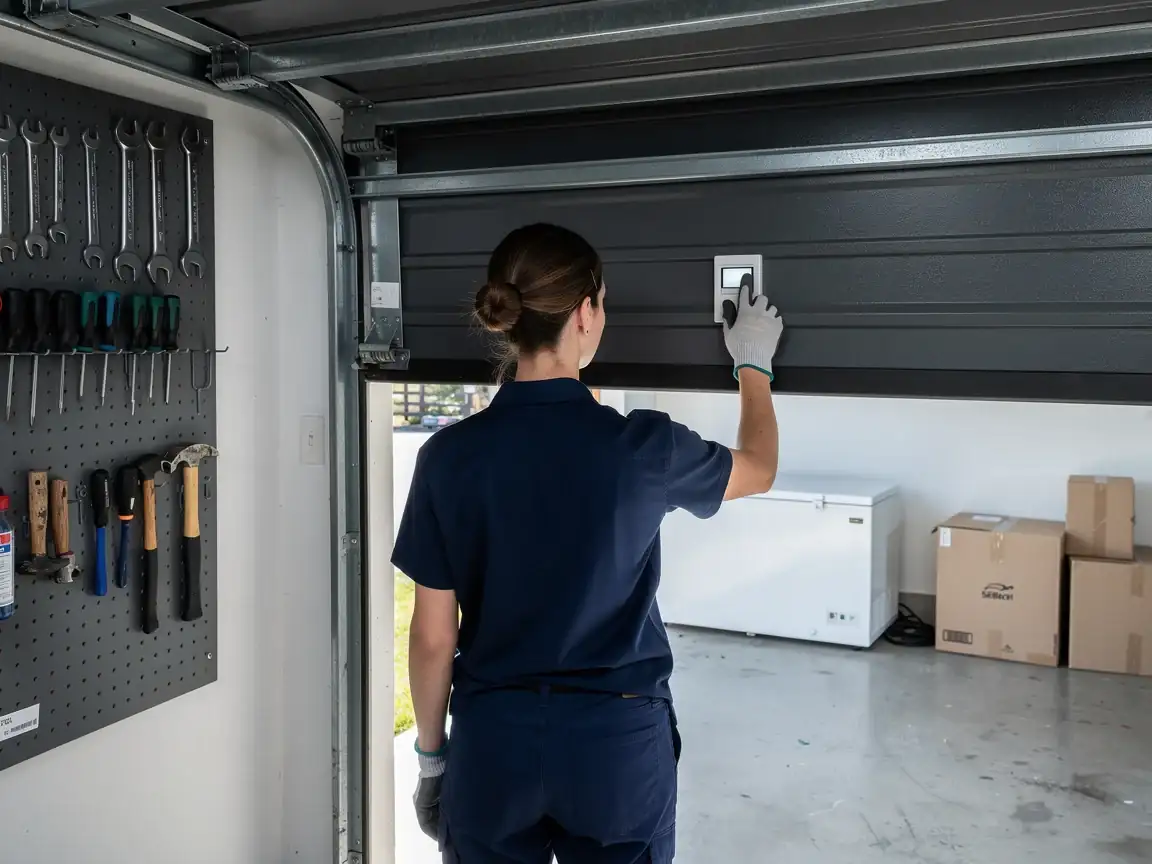
    A technician in a blue uniform adjusts a wall-mounted control panel on a gray garage door.

    Repaired & tested

    The repair is done, the door is set true and tested, and the work area left clean.

Not sure which repair your door needs in Plantation, FL? Describe what it’s doing - every job starts with a diagnosis.

6areas covered
How we work

What to expect

Diagnosis firstEvery visit starts by finding what actually failed - not a pre-written parts list.
The right part for the doorSprings and openers matched to the door’s weight and age, so the fix holds up.
Straight answersWhen a repair makes more sense than a replacement - or the reverse - you hear it plainly.
Clean, careful workTension released safely, hardware set true, the door tested under power before we leave.
92,560Residents in Plantation
8Garage door services
6Neighborhoods & suburbs
FLServing Plantation, FL
Questions

Frequently asked

Straight answers about garage door repair in Plantation. Still unsure? Ask us directly.

Is it worth repairing a garage door opener in a newer Parkland house, or should I replace it?

Depends on what's broken. A failed logic board on an opener that's otherwise sound is usually worth fixing, especially if the motor and drive are fine. If the board, motor, and sensors are all going at once, replacement often makes more sense than piecing it back together one part at a time.

Why does my door reverse right before it closes?

Almost always a photo-eye sensor problem: dirty lenses, one sensor bumped out of alignment, or corrosion inside the housing from humidity. Check both sensors are pointed at each other and the lenses are clean before assuming it's a bigger fault.

Do you have a branch in Parkland?

No, we run out of Plantation, about 14 miles away. We service Parkland from there rather than from a local depot.

Ready to get your garage door sorted?

Tell us what it’s doing and where you are in Plantation - we’ll take it from there.

Request a QuoteCall