Serving Plantation, FL & nearby
(954) 459-3987
Plantation, FL

What Plantation's Housing Stock Means for Your Garage Door

A guide for Plantation homeowners on when to leave a garage door alone, what to check first, and how mild coastal humidity wears on doors built 1953-2005.

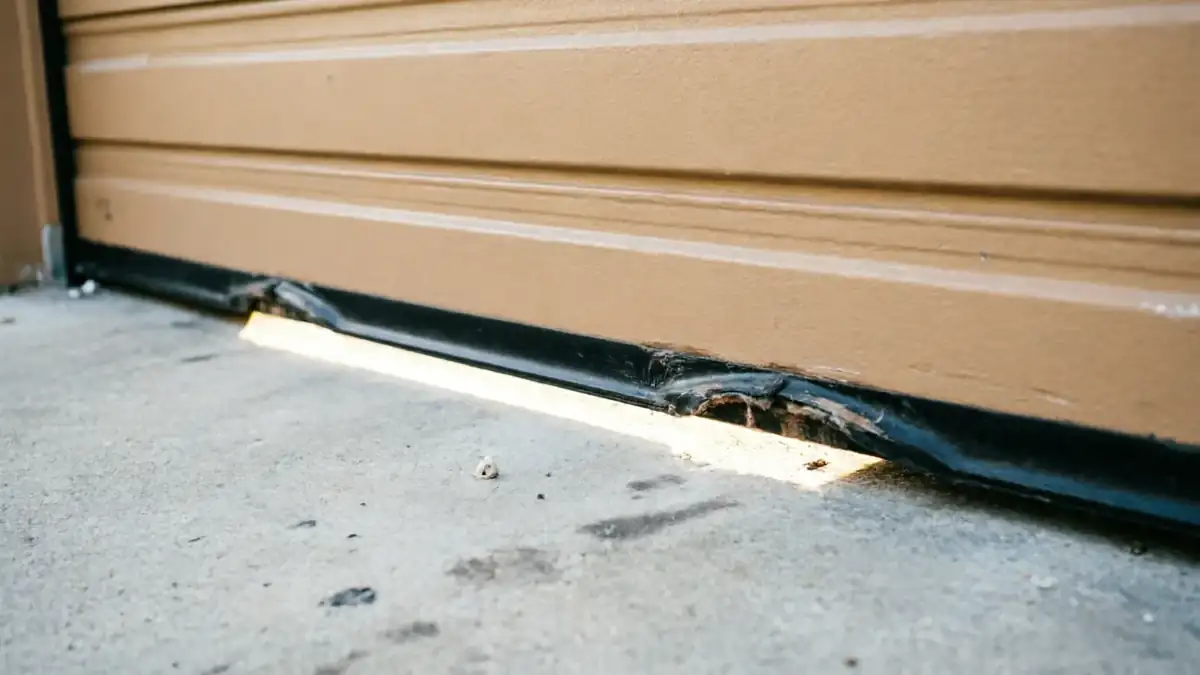
The bottom of a tan garage door has a damaged weather seal and a gap.

Leaving It Alone

Most garage doors in this part of Florida are over-serviced by owners who read a checklist meant for a different climate. You don't need to lubricate every week, and you don't need to re-tension a torsion spring because it made a noise once. A lot of the houses around here went up between 1953 and 2005, with the bulk of that stock dating to the 1960s and '70s, and the hardware on those doors was built for decades of use with minimal attention. If the door opens smooth, closes flush, and the opener doesn't strain, leave it alone. Chasing a problem that isn't there is how a fine spring gets over-tightened or a track gets bent trying to "fix" a squeak that was never structural. The one thing worth doing on a schedule, regardless of age, is checking the weather seals and draughts at the bottom panel and sides - rubber breaks down on its own timeline, not the door's. Past that, resist the urge to tinker. A door that's been quietly doing its job since the Carter administration doesn't need a tune-up because a neighbor mentioned one.

What to Look At First

Start at the bottom seal. On a door from the 1960s-70s stock that makes up most of this area's garages, that seal has usually been replaced at least once already, and if it's cracked or flattened it's letting in more than draft - it's letting in whatever's crawled under the slab edge. Next, look at the rollers. Original steel rollers on a house built mid-century are often still in the track, and they're the part most likely to be loud without being dangerous. Check the bottom bracket and cables for rust pitting, since houses in this income band ($60,853 median) often held onto original openers and hardware longer than newer subdivisions would. Last, test the auto-reverse by setting a 2x4 under the door and closing it. That's a five-minute check, not a service call, and it tells you more about real risk than any noise the door makes. If the opener strains on a door that otherwise moves fine by hand, the spring is doing less work than it used to - that's the one sign worth calling about.

What the Weather Here Does to It

Plantation sits in a mild temperate band - no hard freezes, no deep cold to shrink metal or crack old lubricant into grit, which is the main thing that kills doors up north. What this climate does instead is slower: steady humidity working on the weather seals and draughts year-round, and salt-tinged air drifting in from the coast corroding springs and hinges that never get cold enough to fully dry out between humid stretches. A door here doesn't fail from thermal shock; it fails from rubber that's gone stiff and cracked from UV and moisture cycling, and from fasteners that rust quietly for years before a spring finally lets go. That's a different failure pattern than a lot of national maintenance advice assumes, and it's why checking seals matters more here than checking for ice-stiffened springs. The upside of mild weather is that nothing moves or acts up seasonally the way it does elsewhere - a door that works in July works the same way in January. The downside is that corrosion doesn't announce itself until the part is already compromised.

The Situation

Across the service area there are roughly 114,663 owner-occupied houses among 410,276 households, and a large share of them are sitting on garage doors original to a house built decades ago. That's not a problem by itself - a well-maintained door from 1975 can still be worth repairing rather than replacing, and we won't tell you to swap a working door just because of its age. But when the bottom section is rusted through from years of humidity, or the track has been bent and re-bent, replacement usually costs less over time than another repair. We don't carry every obsolete panel style from that era, and sourcing a matching replacement panel for an older door can take longer than people expect - that's the honest limit here. If your door is from that original mid-century wave and still moves true, the smart move is a seal check, not a new door.

How it works

From “it’s stuck” to “it’s fixed”

  1. 1
    A man stands in a driveway looking at his phone, with a partially open garage door behind him.

    Tell us what’s wrong

    Describe the symptom - won’t open, loud bang, opener runs but the door won’t move.

  2. 2
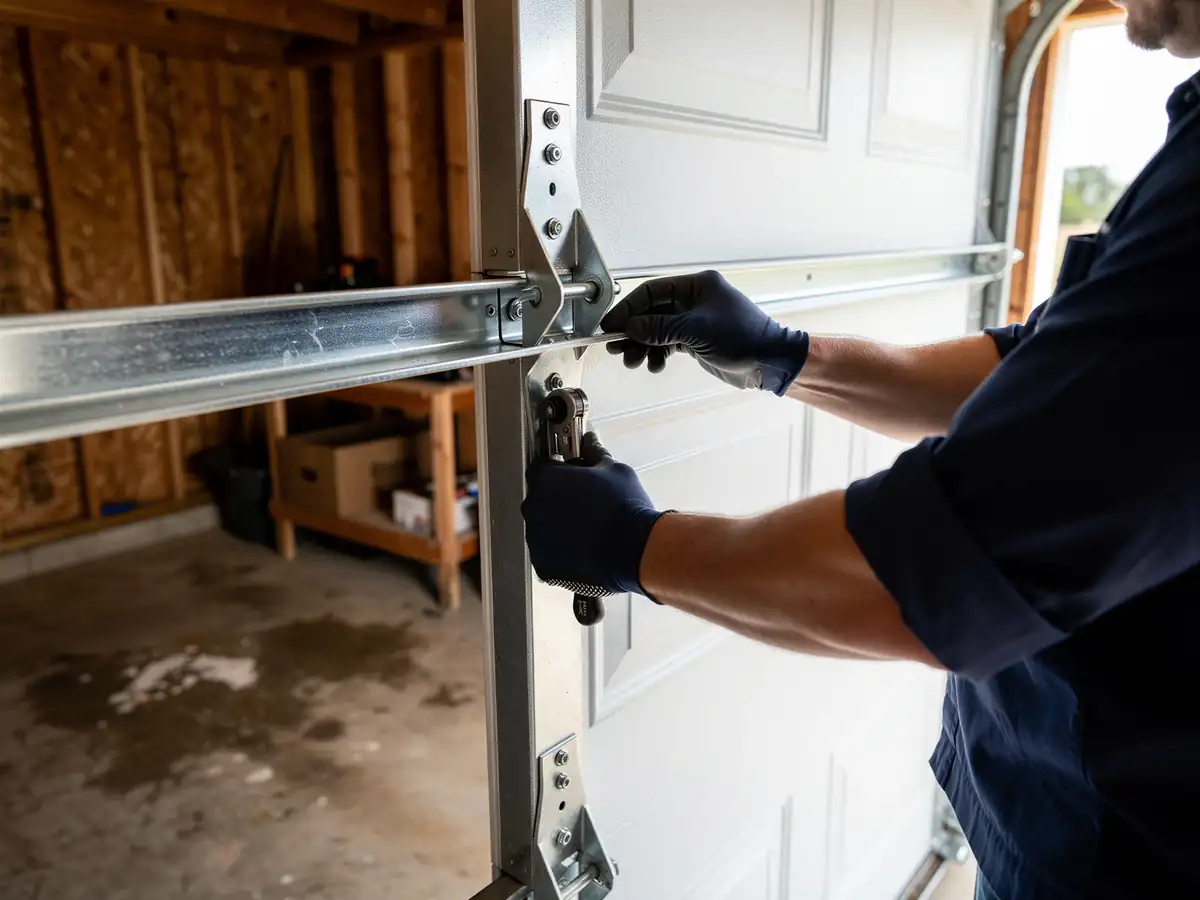
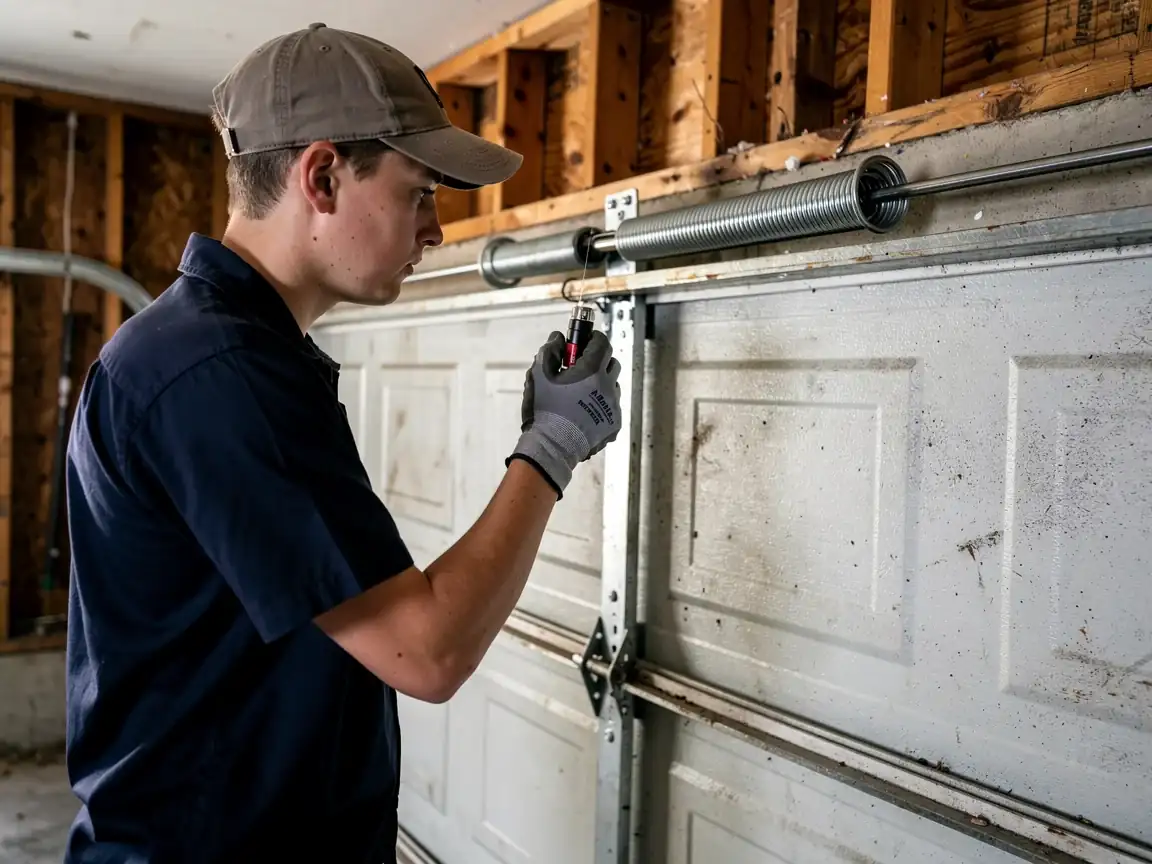
    A technician in a cap and gloves works on a garage door torsion spring.

    On-site diagnosis

    A technician tests the door under power and by hand and finds what actually failed.

  3. 3
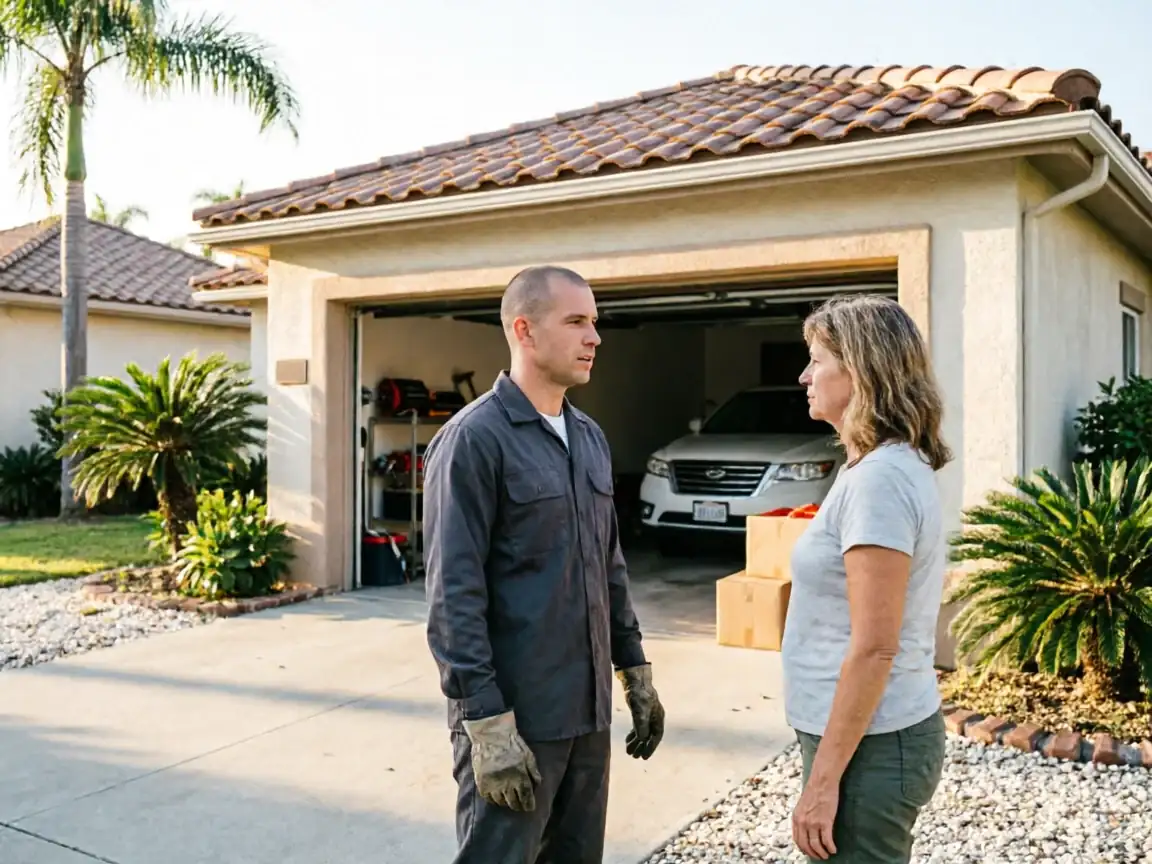
    A technician and a woman stand in a driveway in front of an open garage.

    Clear, up-front plan

    You get the fix that’s needed and what drives the cost - before any work starts.

  4. 4
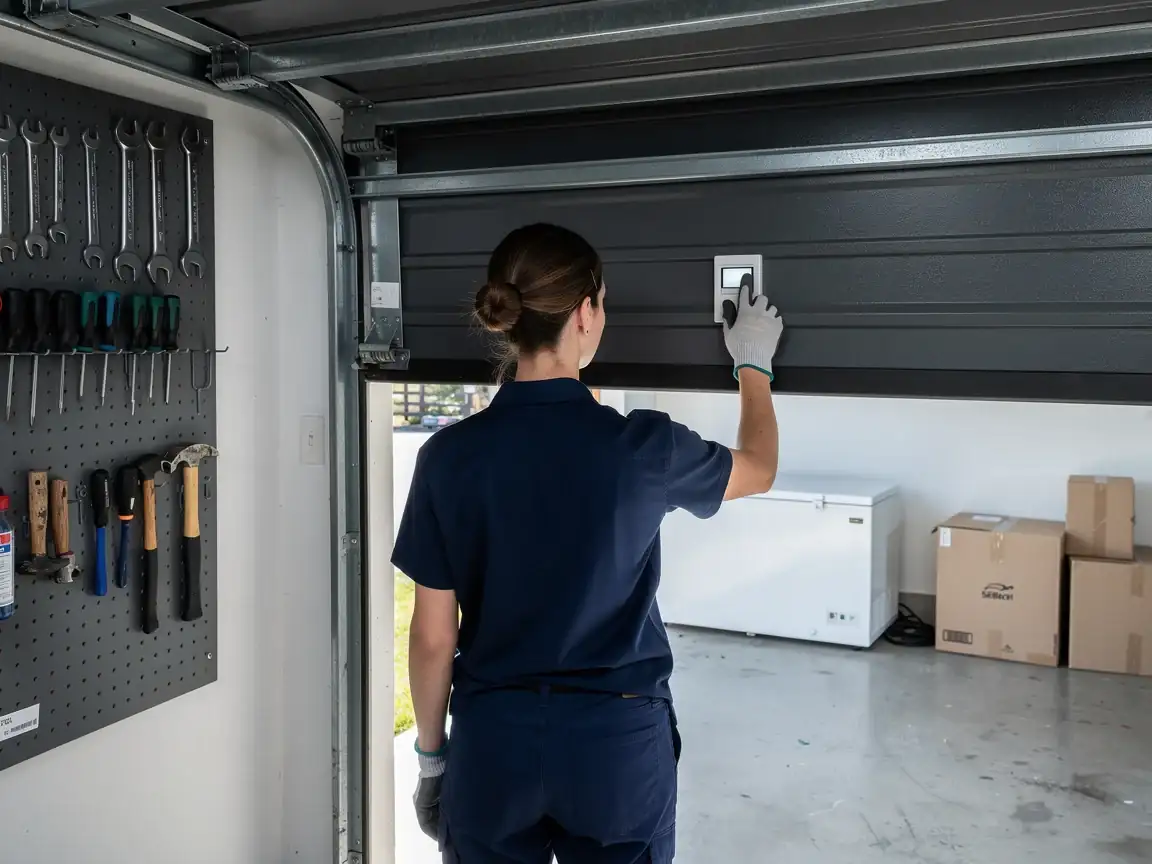
    A technician in a blue uniform adjusts a wall-mounted control panel on a gray garage door.

    Repaired & tested

    The repair is done, the door is set true and tested, and the work area left clean.

Not sure which repair your door needs in Plantation, FL? Describe what it’s doing - every job starts with a diagnosis.

6areas covered
How we work

What to expect

Diagnosis firstEvery visit starts by finding what actually failed - not a pre-written parts list.
The right part for the doorSprings and openers matched to the door’s weight and age, so the fix holds up.
Straight answersWhen a repair makes more sense than a replacement - or the reverse - you hear it plainly.
Clean, careful workTension released safely, hardware set true, the door tested under power before we leave.
What we do

Garage Door Services

Repair and installation work for Plantation homes and businesses.

Questions

Frequently asked

Straight answers about garage door repair in Plantation. Still unsure? Ask us directly.

How often should I replace the weather seal on my garage door in Plantation?

There's no fixed interval, but in this climate the seal usually goes brittle or flattens from humidity and UV before anything mechanical fails. Check it twice a year by hand - if it's cracked, hard, or doesn't spring back after you press it, replace it. It's the cheapest fix that prevents the most water and pest intrusion.

Why does my garage door squeak even though it still opens fine?

On older doors common in this area, built mostly in the 1960s and '70s, squeaking usually comes from original steel rollers or dry hinges, not a failing spring. If the door opens and closes smoothly by hand and the opener isn't straining, it's a lubrication issue, not a repair job.

Is it worth repairing a garage door from a house built in the 1970s?

Often yes. A lot of the housing stock here dates to that era, and the doors were built solidly. If the panels aren't rusted through and the track is straight, repairing springs, cables, or rollers usually costs less than replacement and keeps a door that still has years left.

Ready to get your garage door sorted?

Tell us what it’s doing and where you are in Plantation - we’ll take it from there.

Request a QuoteCall