Plantation's housing dates mostly to 1953-2005 with a 1975 median build year, and the mild climate means track problems here come from hardware age, not frost. Here's what actually causes it.
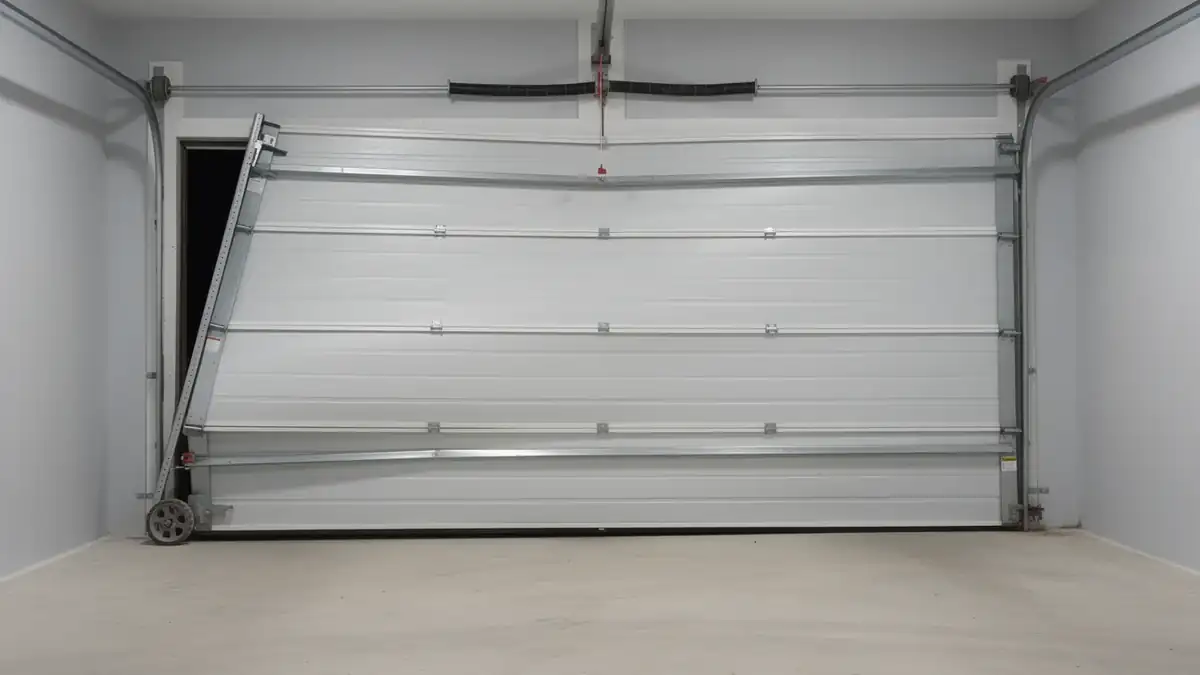
A door that rattles off track once and seems fine after you nudge it back isn't fine. The rollers rode out of the channel for a reason, and that reason doesn't fix itself. Most of the houses this company works on were built somewhere between 1953 and 2005, with the median landing around 1975 - which means a huge share of the doors in this area are running on track and bracket hardware that's original or close to it. Fifty years of opening and closing wears the mounting screws loose in the jamb, and a track that's a quarter-inch out of plumb at the top can be an inch out at the bottom. Ignore it and the rollers start chewing into the track edge instead of rolling inside it. At that point you're not tightening a bracket, you're replacing a section of track, and on a door that old the matching hardware isn't always a simple swap. The honest version: a few weeks of a slightly loose track rarely costs you anything. A few months of it running bent usually costs you a service call instead of a five-minute bracket tighten.
What to Look At First
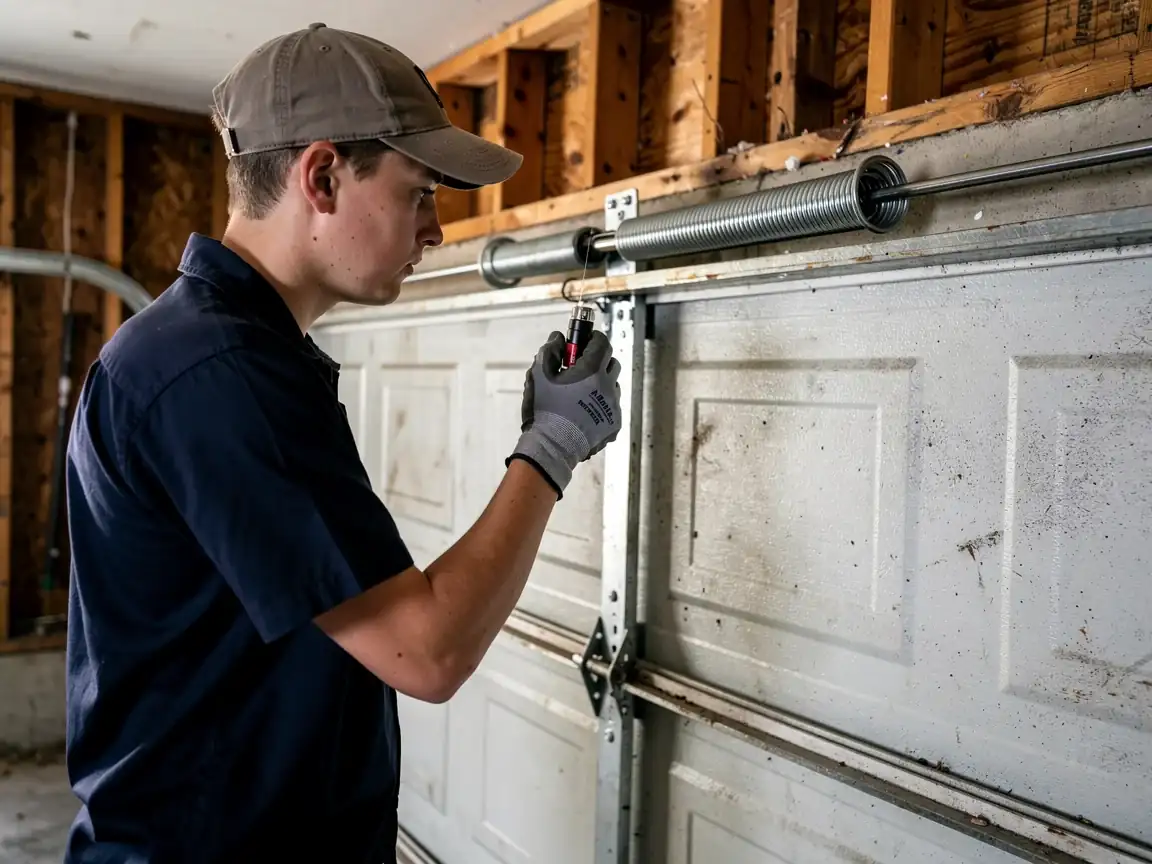
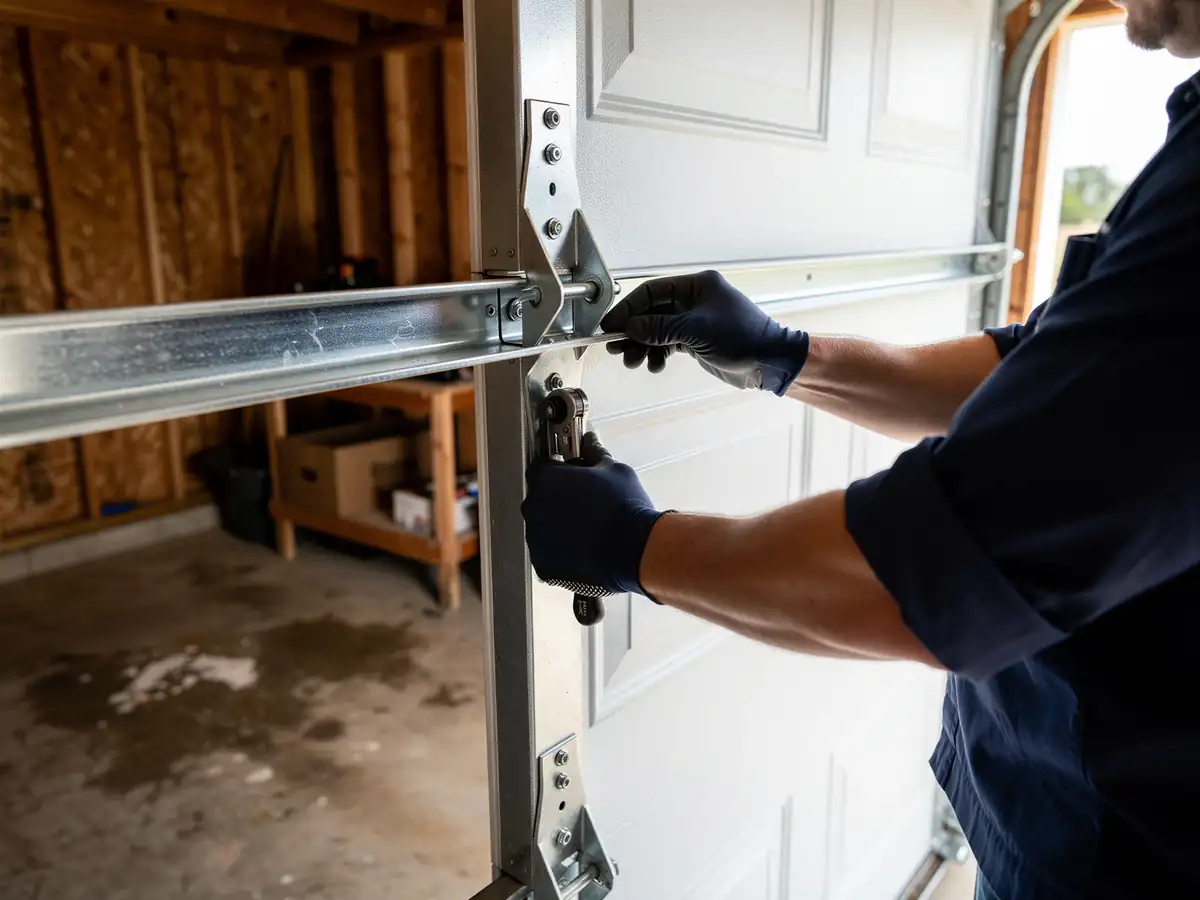
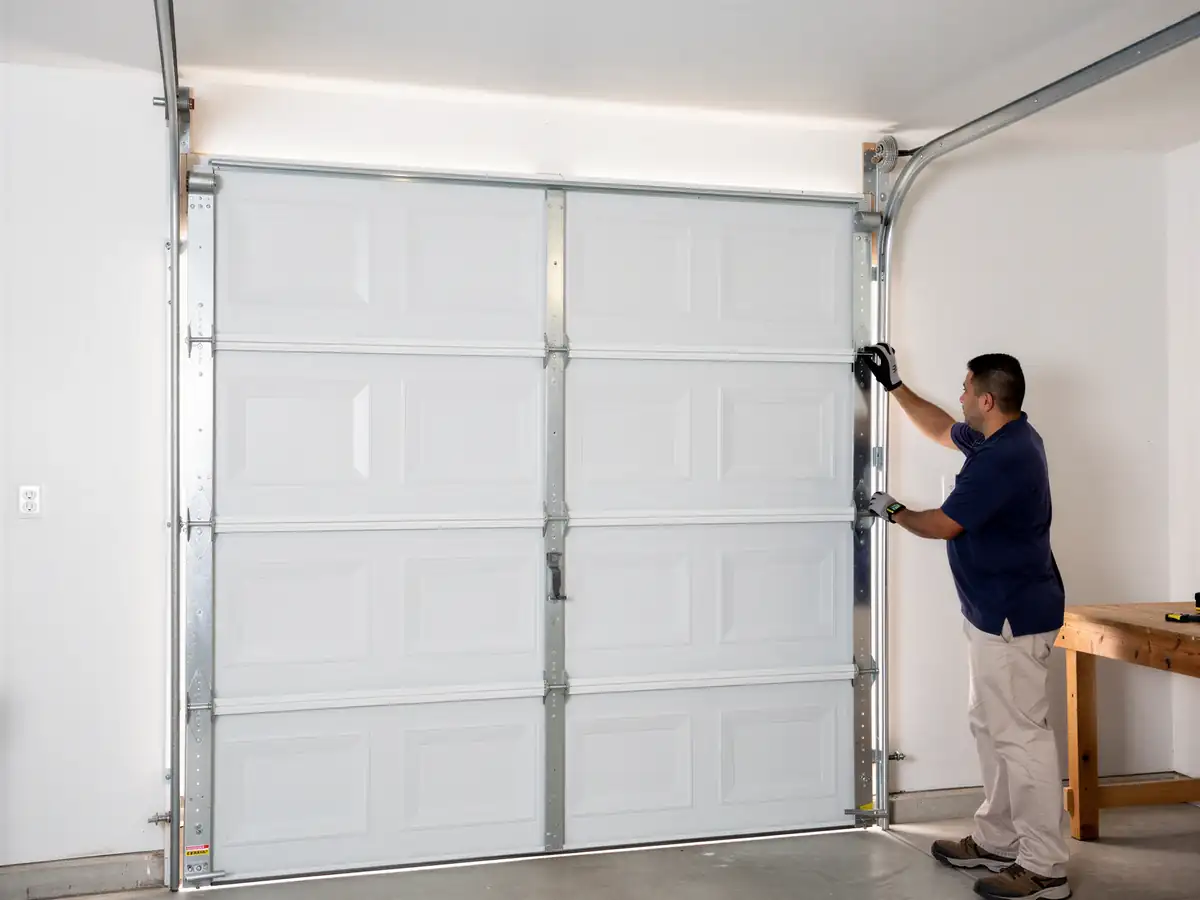
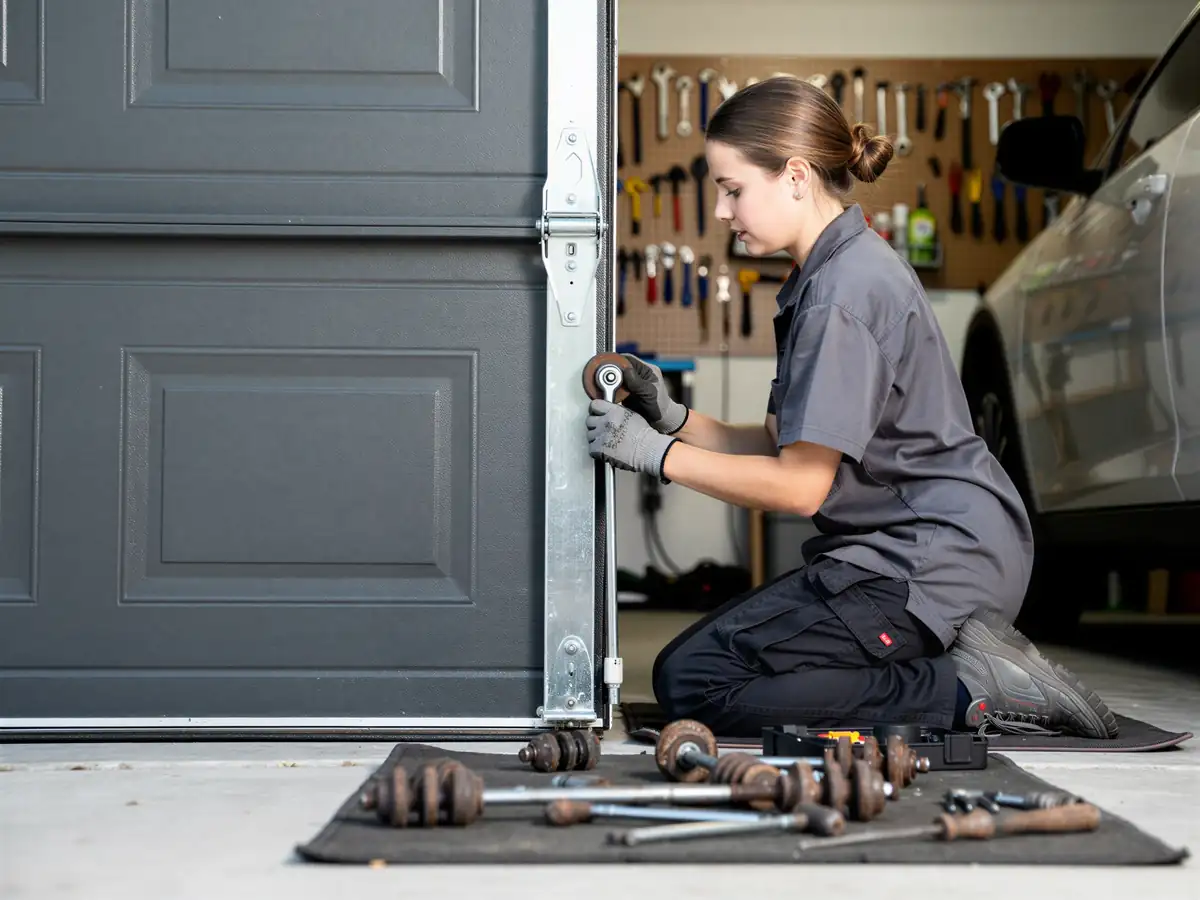
Before anything else, look at the brackets holding the track to the framing - not the track itself. On houses from the 1960s and 70s stock that makes up a lot of the 36 named pockets in this service area, those brackets were lag-screwed into wood jambs that have had decades to shrink, swell slightly, and loosen their grip. Stand the door halfway open and sight down each track from the bottom. If one leans in toward the car more than the other, that's your bracket, not a bent rail. Check the track plumb with a level too - vertical sections should read dead straight top to bottom. Next, look at the rollers themselves. Stretched or cracked rollers ride loose in the channel and let the door wobble side to side as it travels, which eventually walks it right off the edge. None of this requires taking the door apart. It requires fifteen minutes with a flashlight and a willingness to actually get the ladder out instead of guessing from the driveway.
What the Weather Here Does to It
Plantation sits in a mild temperate band, which actually works in your favor compared to a lot of the country. You're not fighting the freeze-thaw cycle that heaves concrete slabs and torques door tracks out of true every winter - that's a northern-climate problem this area mostly skips. What you get instead is a slower, quieter version of the same failure: steady use without the seasonal extremes that would force a homeowner to notice sooner. A door here can run misaligned for a long stretch without any dramatic weather event flagging it, because there's no hard freeze forcing a sudden shift. That's not a reason to relax about it. It's the reason tracks in this area tend to drift gradually from fastener fatigue and years of cycles rather than from a single cracked slab or a frozen bracket snapping overnight. The age of the hardware does the damage here, not the season.
The Situation
Put those two things together - housing stock with a median build year around 1975, and a climate that doesn't force sudden structural shifts - and the picture for Plantation is pretty consistent: when a door goes off track in this area, it's almost always years of loosened fasteners and worn rollers catching up with the door at once, not a single weather event or a bent track from a storm. That also means the fix is usually smaller than people expect. Re-securing brackets into solid framing and swapping worn rollers solves most of what we see. Where it gets bigger is when the track itself has been bent from running misaligned too long - at that point realigning it is a temporary patch, and the honest call is to replace that section rather than keep straightening it every few months. We don't recommend fighting a bent track indefinitely just to avoid a parts cost.
How it works
From “it’s stuck” to “it’s fixed”
1
Tell us what’s wrong
Describe the symptom - won’t open, loud bang, opener runs but the door won’t move.
2
On-site diagnosis
A technician tests the door under power and by hand and finds what actually failed.
3
Clear, up-front plan
You get the fix that’s needed and what drives the cost - before any work starts.
4
Repaired & tested
The repair is done, the door is set true and tested, and the work area left clean.
Not sure which repair your door needs in Plantation, FL? Describe what it’s doing - every job starts with a diagnosis.
My door only jumps the track on one side - does that mean one roller is bad?
Not necessarily. Check the bracket on that side first. In houses from the 1960s and 70s stock common in this area, one side's mounting screws often loosen before the other, especially if that jamb has settled slightly more over the decades. A loose bracket pulls the whole track out of plumb on that side, and the roller takes the blame when it's really the mounting that moved.
Is a bent track something that can be straightened, or does it need replacing?
A mild bend near the bottom, where cars sometimes clip it, can sometimes be worked back into shape. Anything bent from a door running misaligned for months is usually work-hardened steel that won't hold a true line again. We'll check it in person, but we don't recommend repeatedly re-bending a section just to avoid a replacement cost.
Does Plantation's weather play any role in this at all?
Less than people assume. This area sits in a mild temperate band, so you're not dealing with freeze-thaw cycles that heave slabs and knock tracks out of alignment the way colder regions do. Here it's almost always age and use - loosened fasteners and worn rollers - rather than a weather event.
Ready to get your garage door sorted?
Tell us what it’s doing and where you are in Plantation - we’ll take it from there.