Leaving It Alone
Not every old door needs a call
Plantation's housing stock mostly went up between 1953 and 2005, with the typical build year sitting around 1975, and a door that's run quietly for that long without binding, screeching, or dropping unevenly is usually fine to leave alone. The mild temperate climate here helps - there's no freeze-thaw cycle working the hardware loose the way it does further north, so a door that was installed right and maintained a little tends to just keep going.
Where people get into trouble is treating silence as health
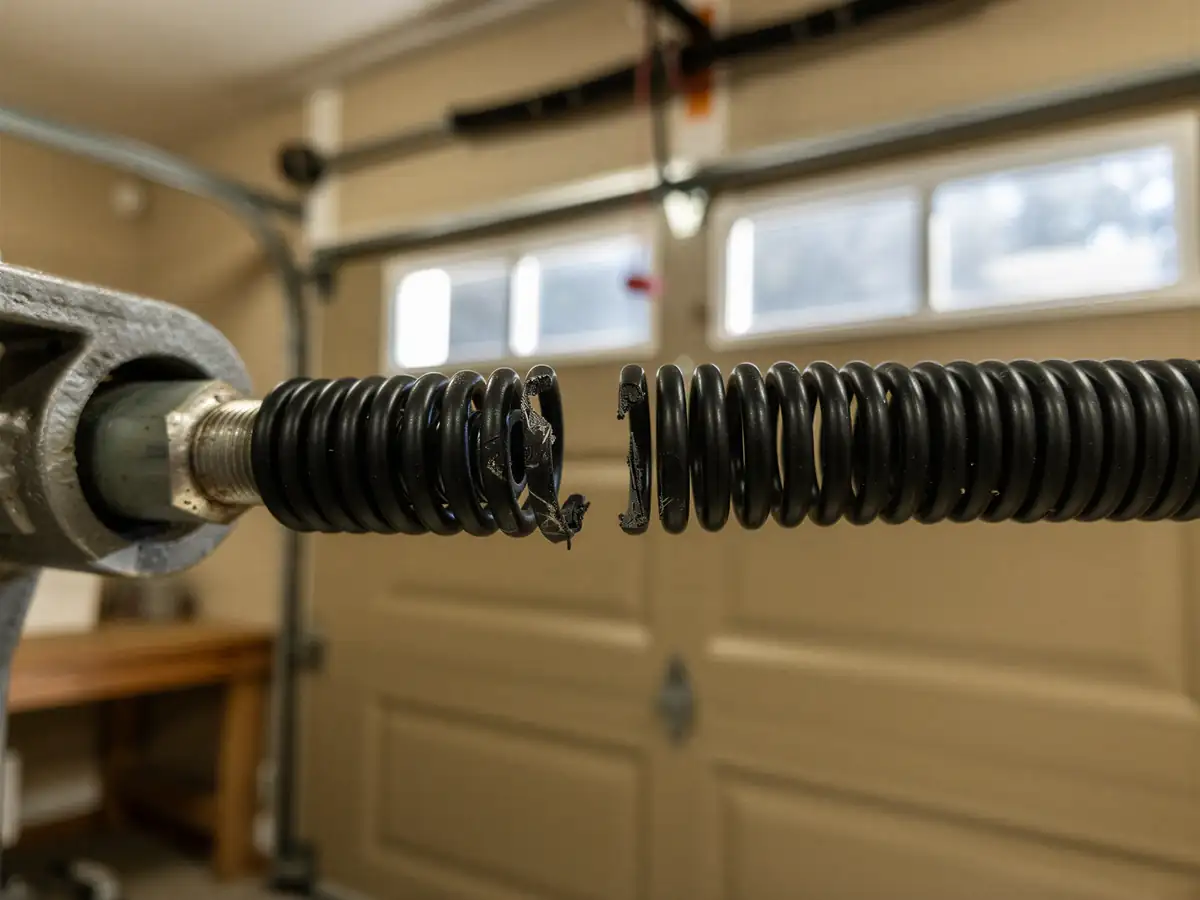
A door can run for years on a spring that's two or three cycles from snapping, and you won't know until it does, usually with the door halfway up and a lot of weight suddenly on the opener instead of the spring. If your door still opens smooth, closes square, and the panels aren't visibly bowed, there's no reason to replace it just because of its age. Age by itself isn't the problem - what matters is what's actually worn.
What to Look At First
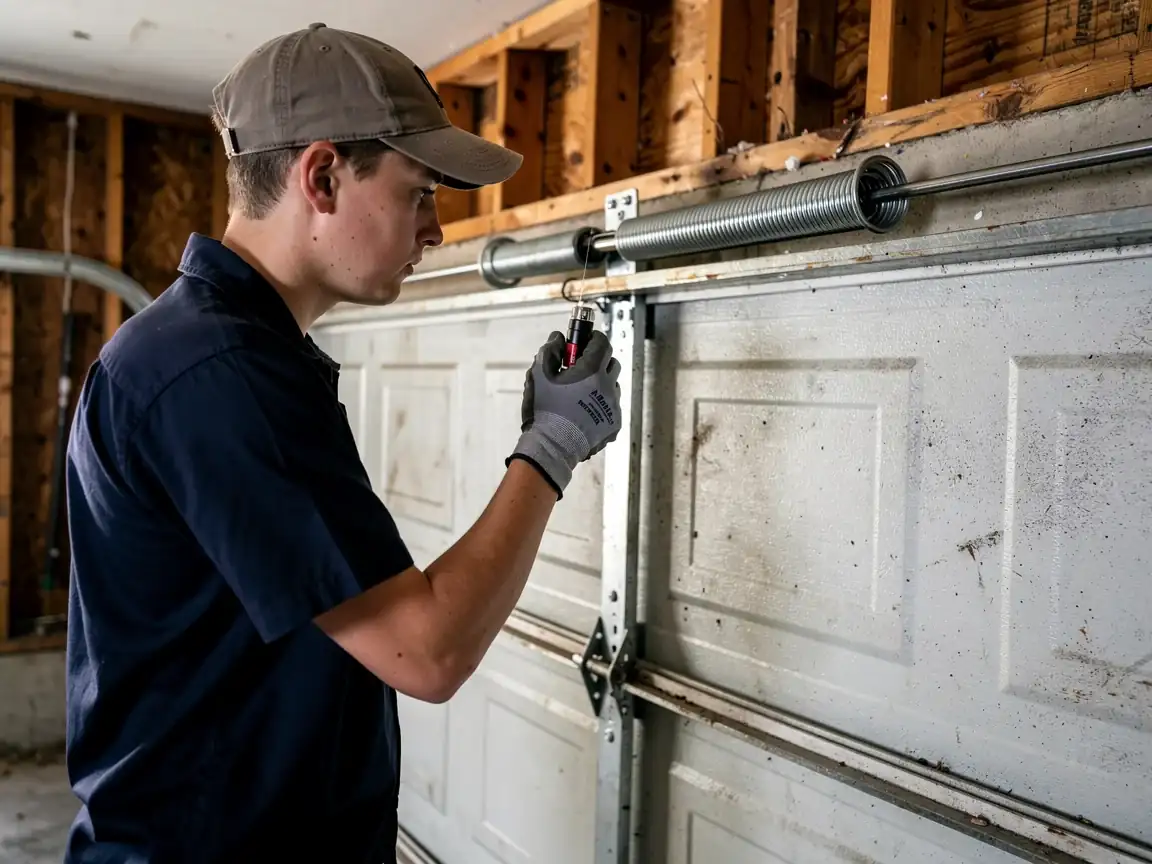
Start with the springs, not the opener. A torsion spring that's original to a house built in the 1960s or 70s has had decades of cycles on it, and even a well-made spring has a cycle life - it doesn't last forever just because it hasn't failed yet. Look for gaps in the coils or a spring that looks stretched compared to its neighbor on a double-spring setup.
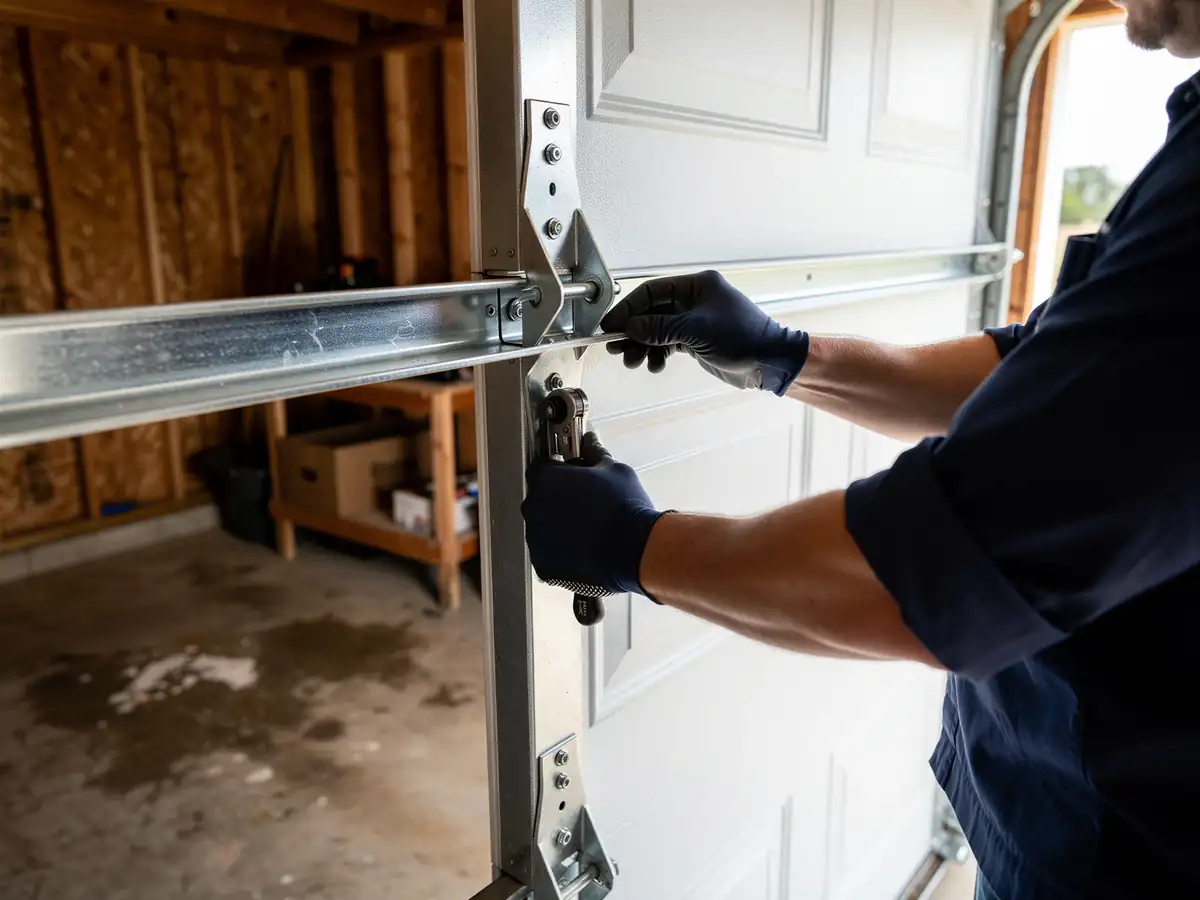
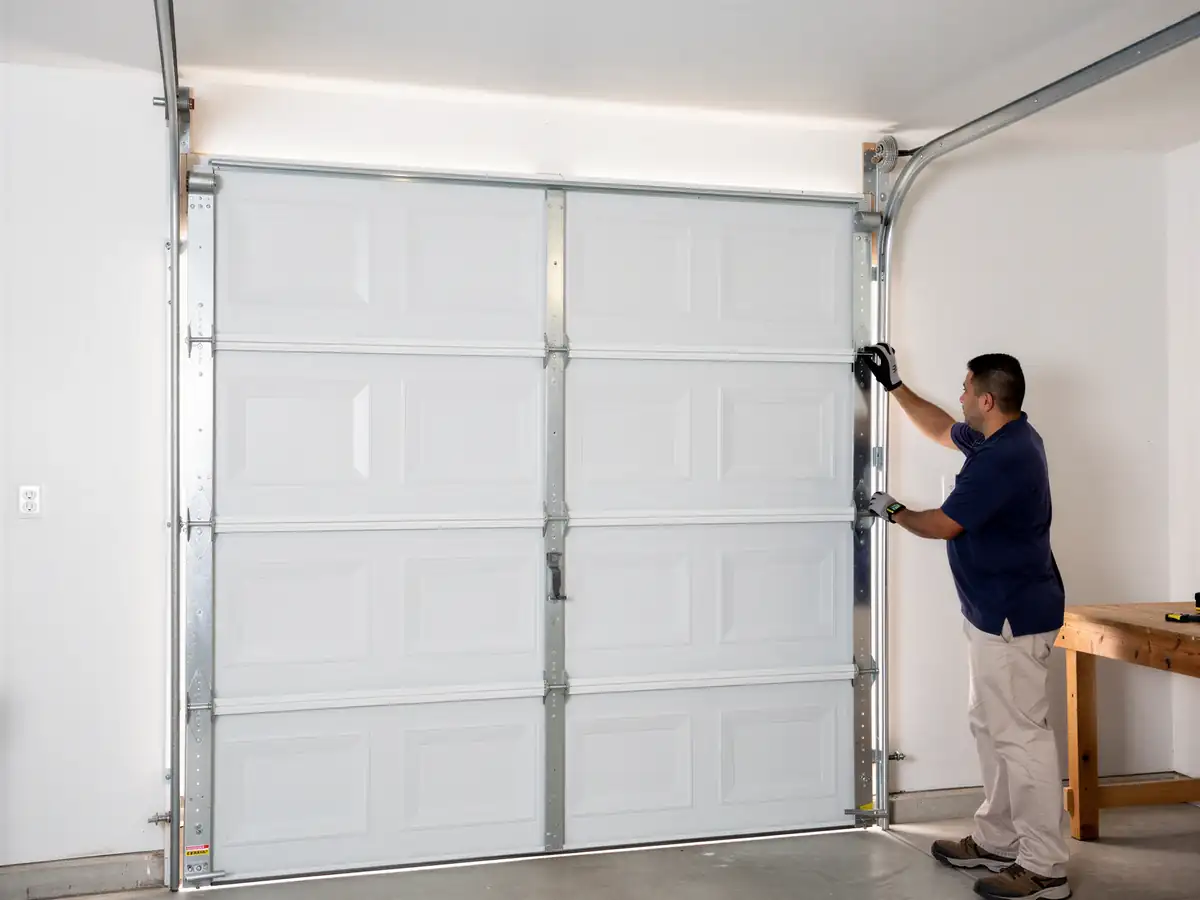
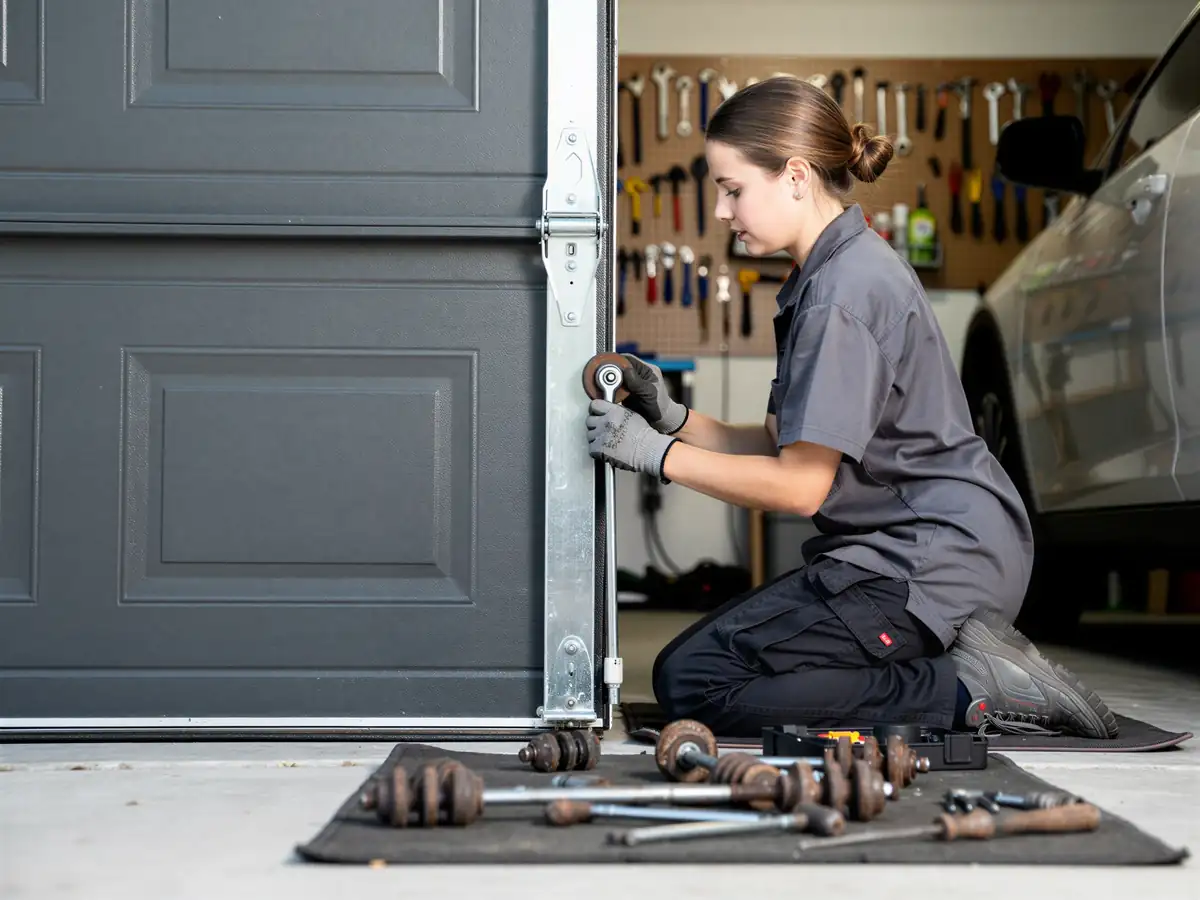
Next, check the track alignment and the rollers. On houses from this era, the garage was often an afterthought in the original build, and additions or settling over the decades can throw tracks out of plumb in ways that wear rollers unevenly on one side.
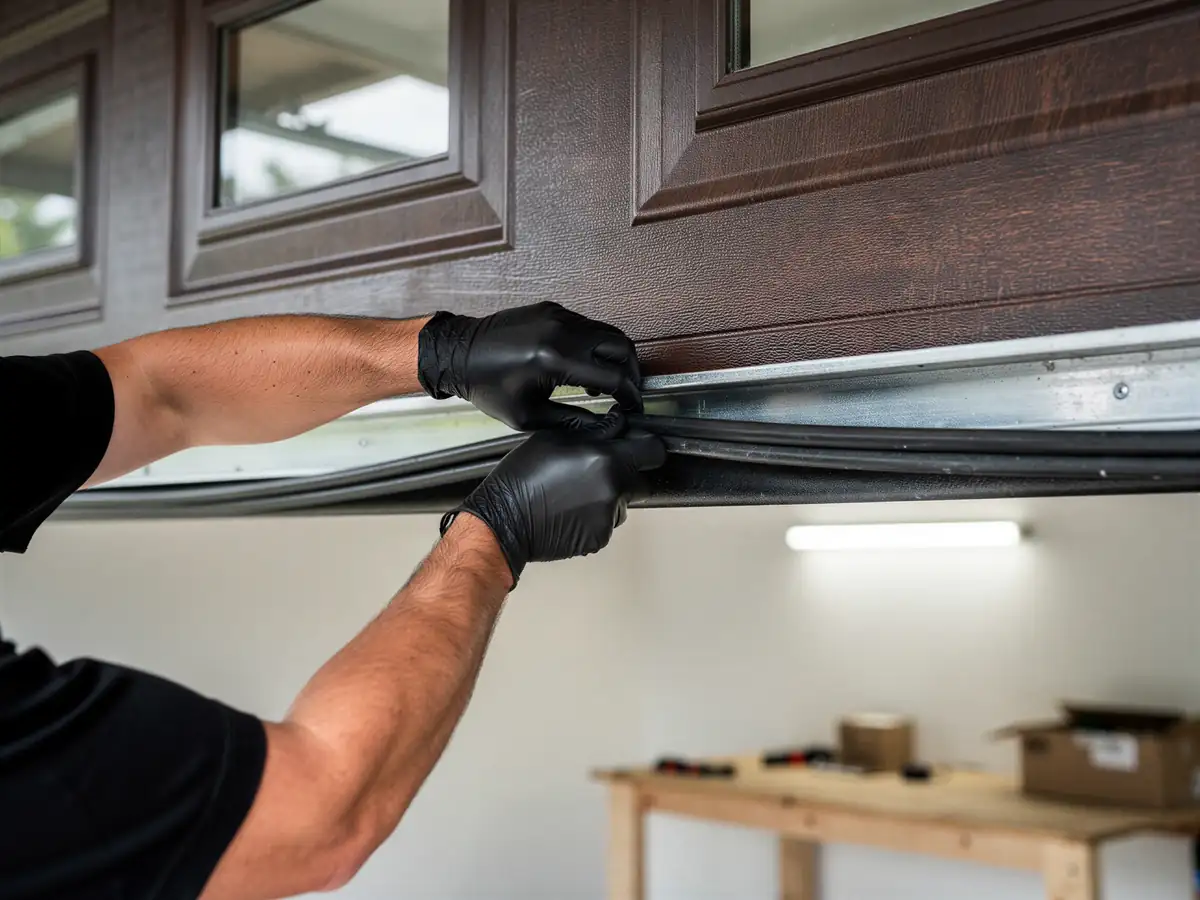
Last, look at the bottom panel and the weatherseal. That's the section that takes the most sun and the most contact, and on a door old enough to have outlived a couple of reseals already, it's often the first thing showing real wear even when the rest of the door is sound. If the bottom panel is rusted through or the seal won't hold a shape anymore, that's a repair worth doing regardless of the door's age - it's cheap and it protects everything above it.
What the Weather Here Does to It
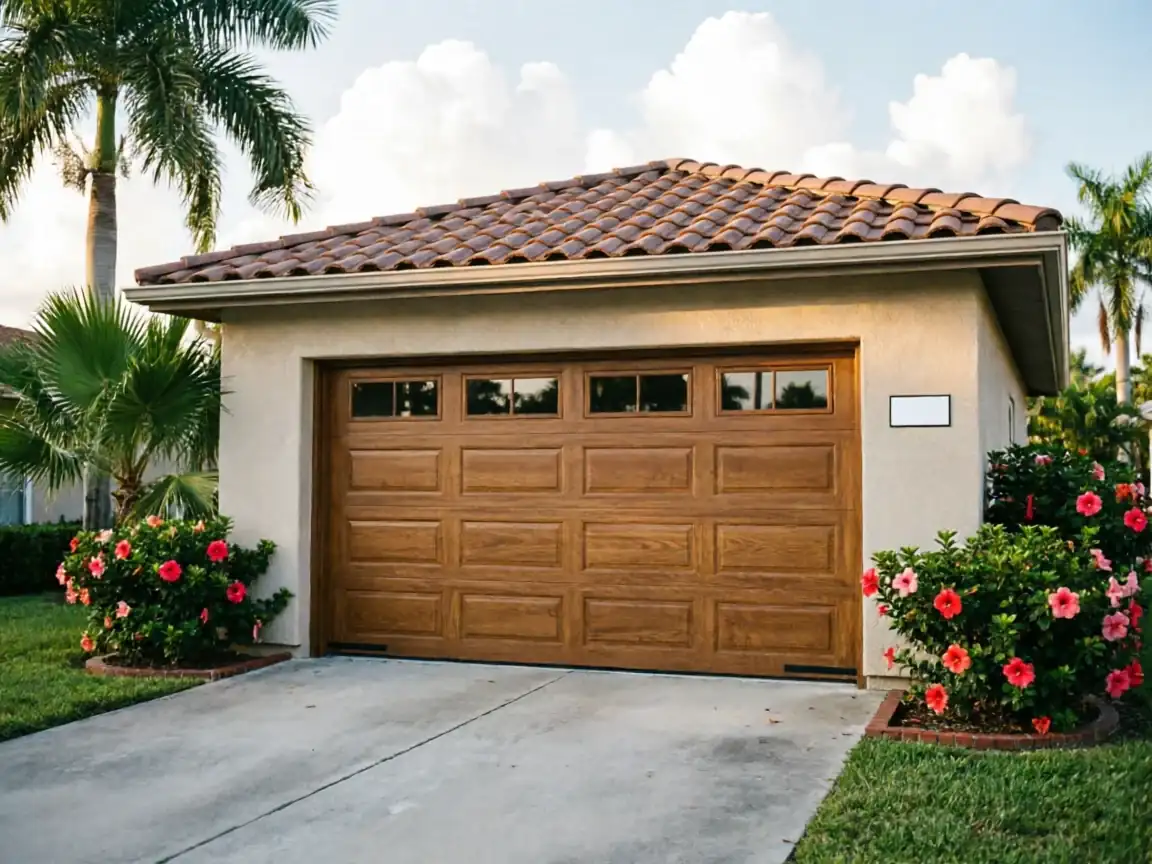
Plantation sits in a mild temperate band, which is the main reason doors here last as long as they do. You don't get the frozen rollers or cracked seals that show up where winters actually freeze, and that alone extends the working life of hardware that would be failing on schedule somewhere colder.
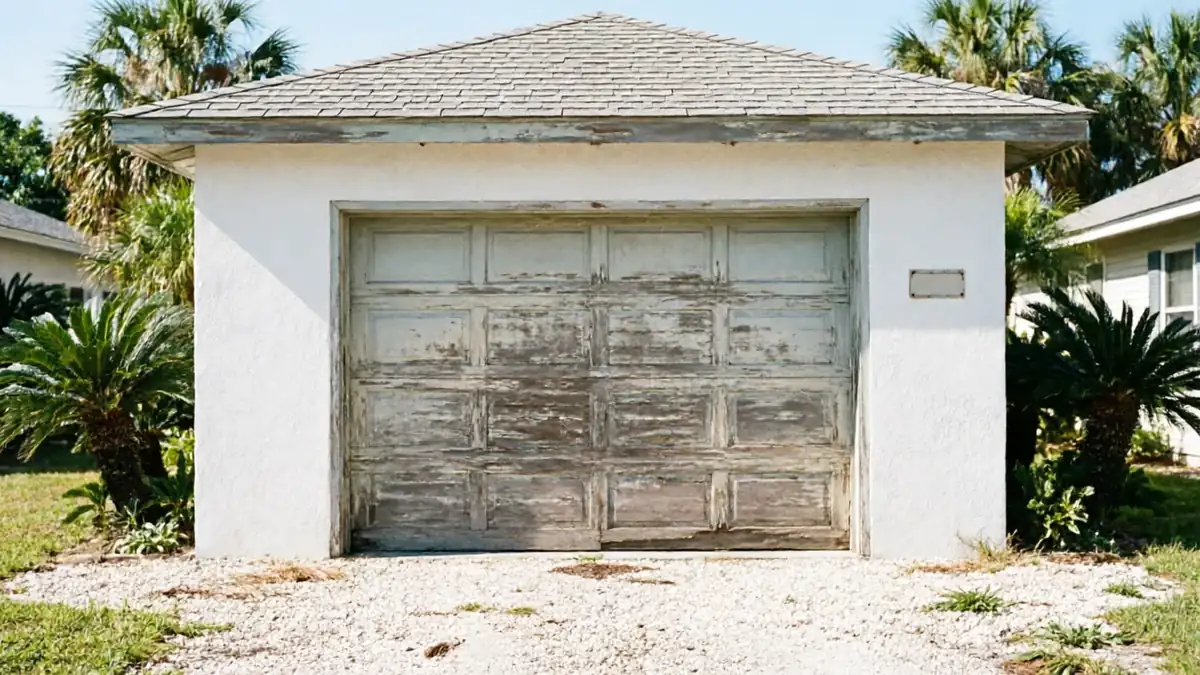
What you do get is humidity and sun, and those wear a door differently. Steel panels on the south and west faces take more direct heat over a year than most people realize, and that shows up as faded paint and, eventually, rust bubbling under it - especially on doors that are old enough to predate better factory coatings. Hardware exposed to humidity year-round corrodes slower than it would in a hard freeze-thaw climate, but it does corrode, and hinges and rollers on an older door are usually the first place you'll see it.
The honest tradeoff: the climate here is gentle on a door's mechanical life but hard on its finish. That's usually why an older door in this area still runs fine but looks rough - the motor and springs are the last things to go, the paint and seals are the first.
The Situation
At a median household income of $60,853 across the service area
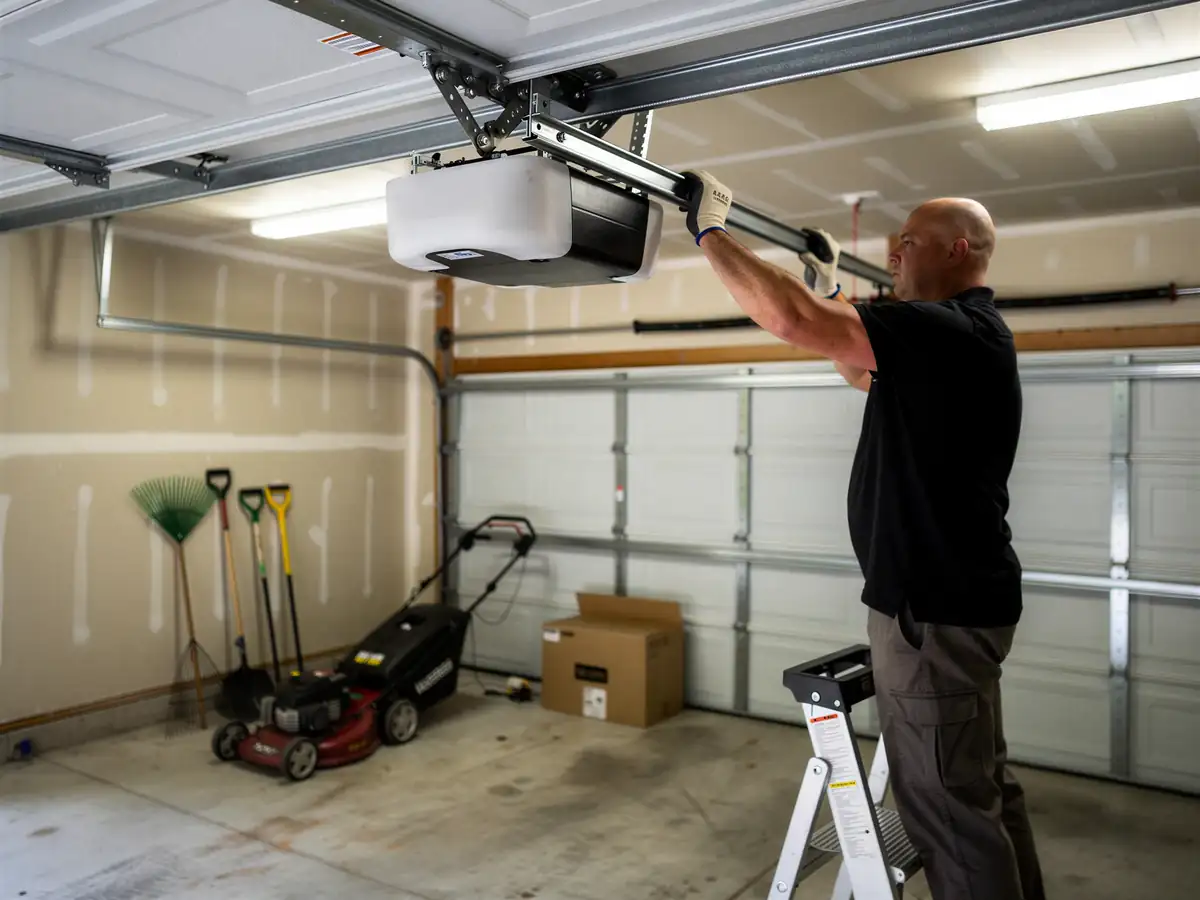
Most homeowners here are weighing a repair in the low hundreds against a replacement that runs well over a thousand, and that math should drive the decision more than the door's birth year. A door built when the house went up in the 1960s or 70s, with sound panels and a spring that's just reaching the end of its cycle life, is almost always a repair call, not a replacement one.
- $60,853 median household income
Where replacement makes more sense is when you're looking at rust-through on multiple panels
A track that's been reworked more than once, or an opener old enough that parts for it are getting hard to source - that last one is a real limitation, and if your opener is old enough, we may not be able to get the exact replacement part and will say so rather than guess. If you're closer to Lauderhill, a few miles east, you're looking at the same 1960s-70s housing stock and the same decision, just with a different street name attached to it. The age of the door tells you less than the condition of three or four specific parts.