Leaving It Alone
A garage door that stops working the second the power cuts isn't broken
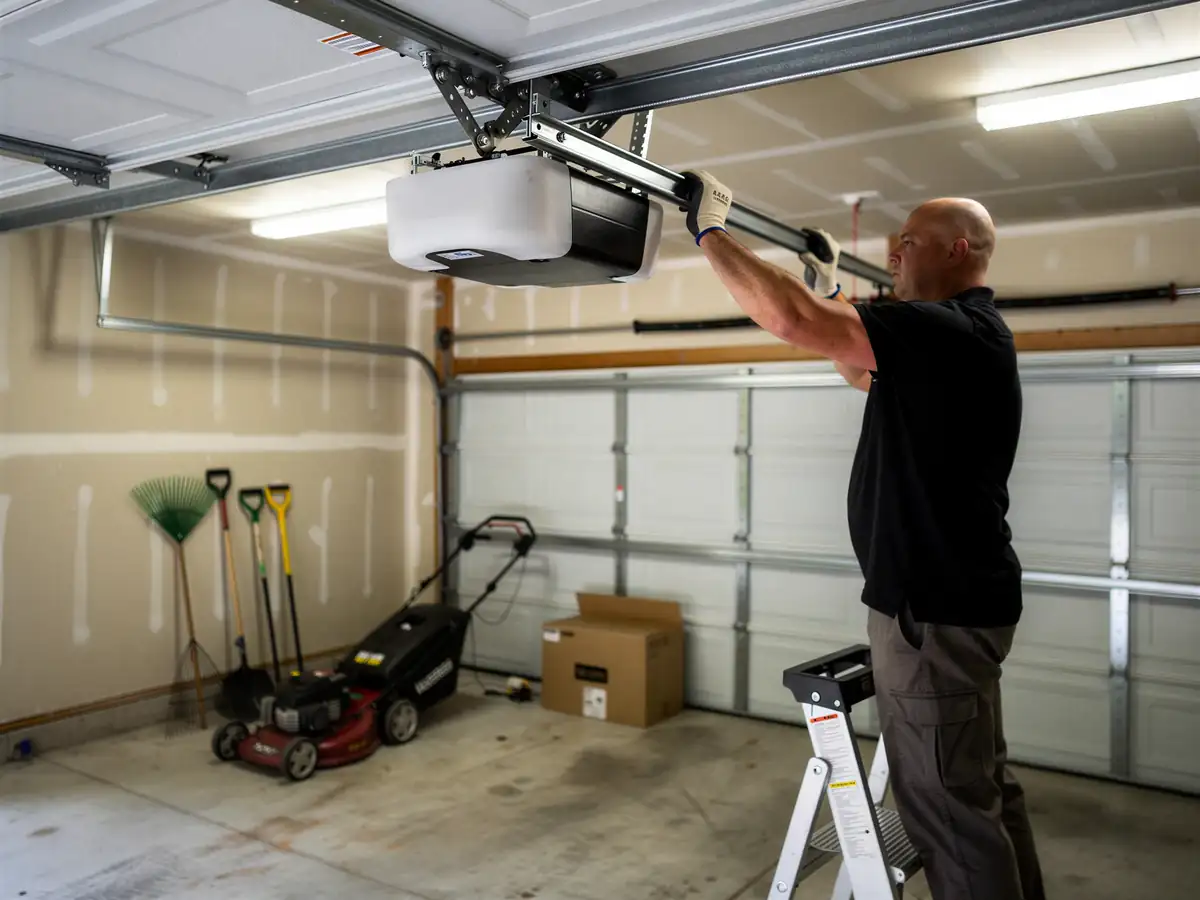
It's doing exactly what a chain-drive or belt-drive opener does when it loses current: nothing, because the motor has no current to move the trolley. If your door was open when the power went, it stays open. If it was closed, it stays closed. Neither is a problem by itself.
Where people get into trouble is panic-pulling the emergency release cord without knowing what's on the other end of it
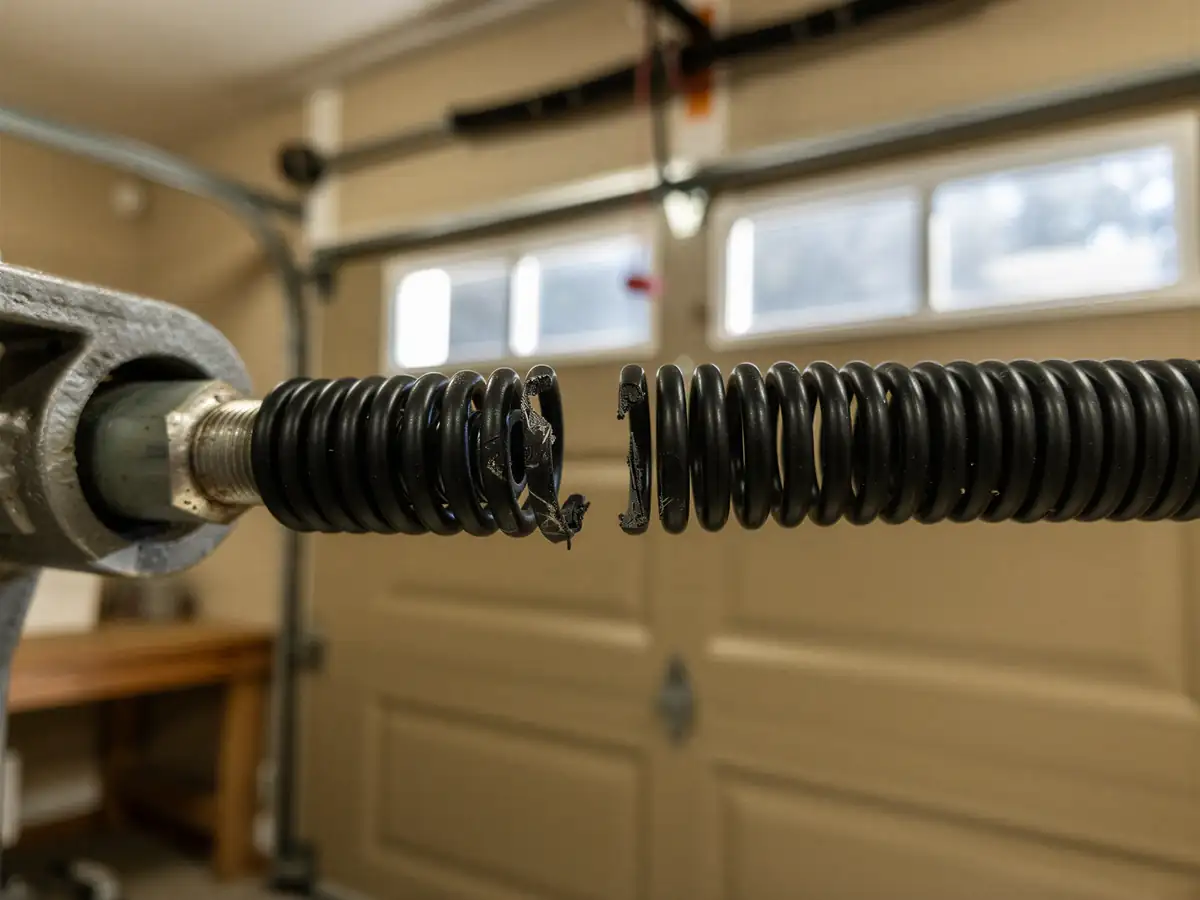
On a door that's heavy, or on a torsion spring that's already weak, an unsupported manual release can let the door come down faster than you expect. If the door was already acting sluggish before the outage, that's a sign to leave it alone and get someone to look at the spring, not just the opener.
Houses in this area built between 1953 and 2005
With most of the stock going up in the 1960s and 70s, often still have the opener that came with a renovation decades back. These units weren't built with any power-loss memory or soft-stop feature, so after an outage they just sit wherever gravity and the trolley left them. That's normal, not a fault.
What to Look At First
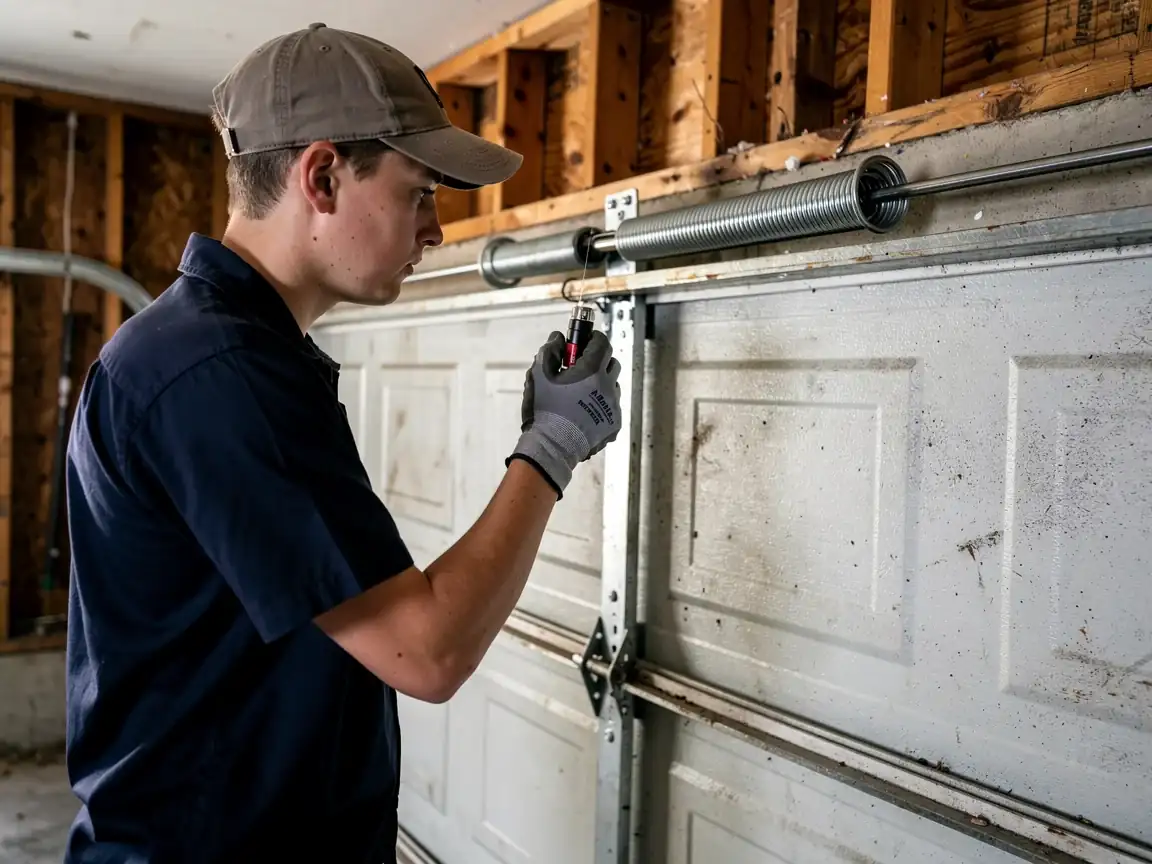
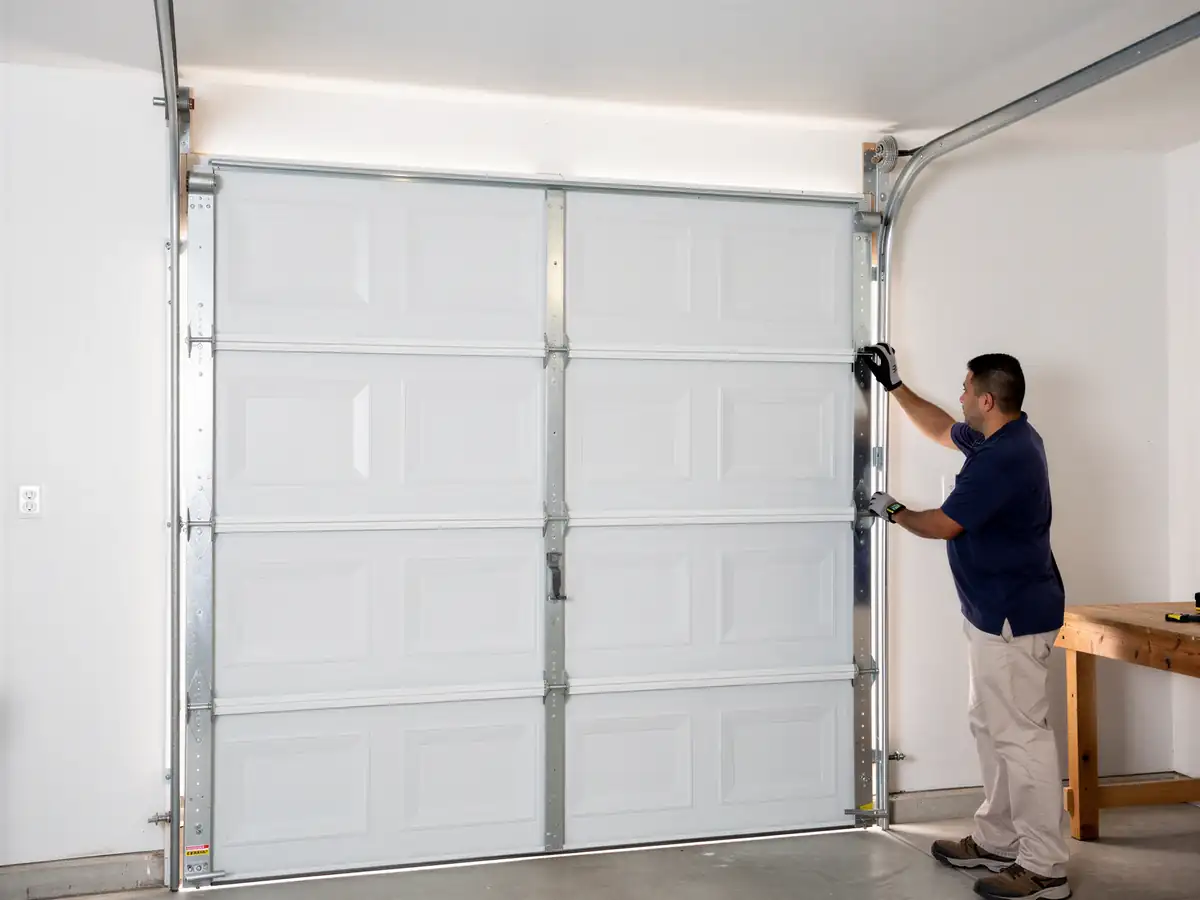
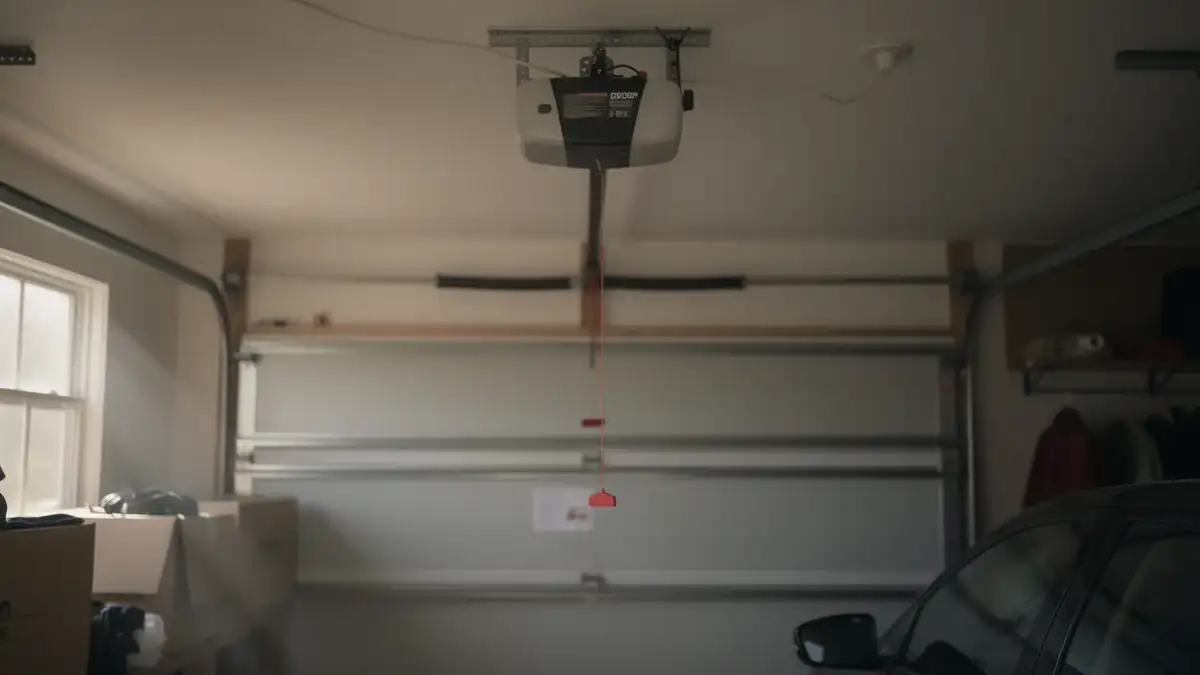
Before you touch anything, find the manual release cord, usually a red handle hanging from a track near the top of the door. Pulling it disconnects the trolley from the opener so you can move the door by hand. On older openers common to 1960s and 70s construction around here, that cord and its spring-loaded latch can get stiff from age rather than weather, since nobody touches it except during an outage.
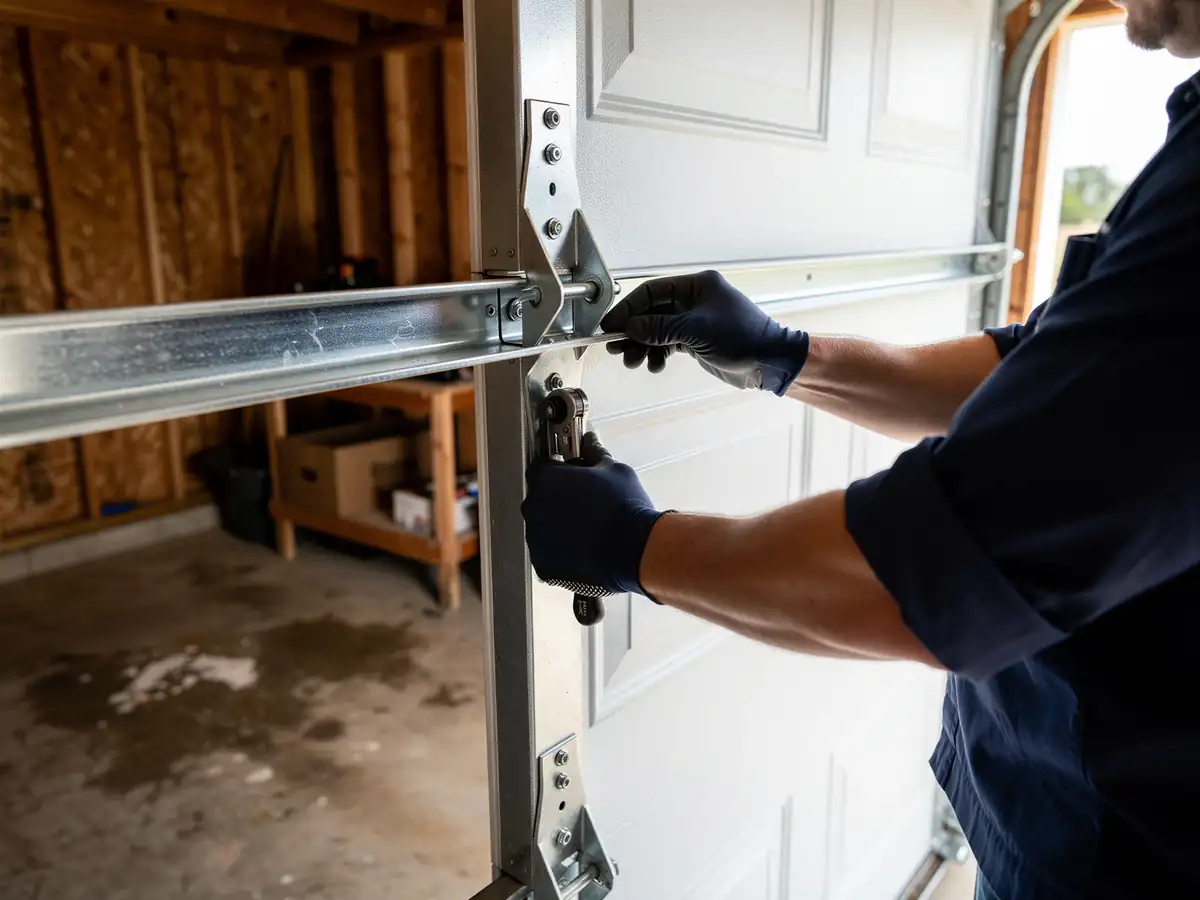
Next, check whether the door moves smoothly by hand once it's disconnected. If it's hard to lift, or it drops on its own, that's spring tension, not the opener, and pulling harder on the release isn't the fix. If it lifts easily and stays where you leave it, the opener itself is the only thing out of the loop.
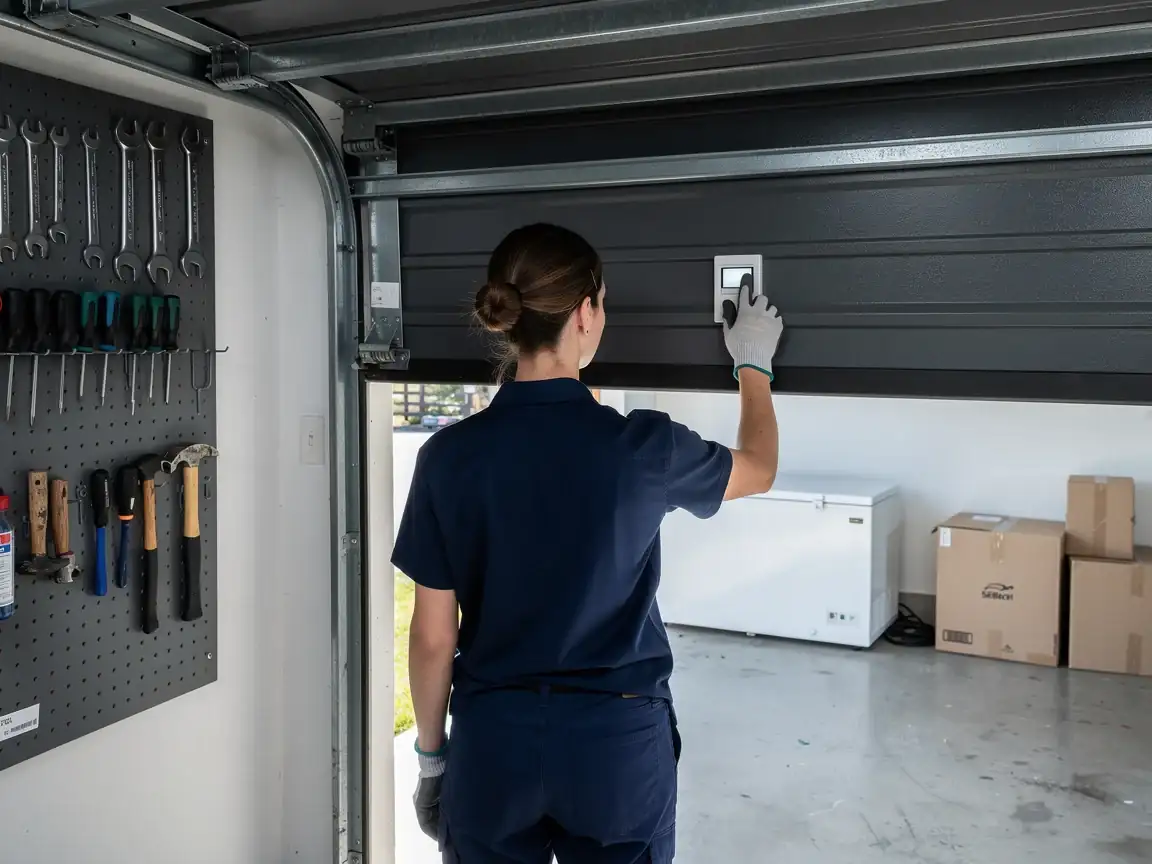
Finally, look at the opener's logic board for any blinking light pattern once power is back. Units installed when a lot of this area's housing went up don't have battery backup, so a short outage simply resets them to idle; they don't need reprogramming for that. We don't work on the electrical panel or the circuit feeding the outlet itself, that part is an electrician's job, not ours.
What the Weather Here Does to It
This area sits in a mild temperate band, so you're not dealing with the freeze-thaw cycle that jams tracks or stiffens springs the way colder climates do. That's one less variable. But mild temperatures don't prevent power cuts, and a door caught mid-cycle during an outage sits exactly where it stopped regardless of the season.
What the mild climate does mean is that opener failures around here tend to trace back to age and wiring rather than seasonal stress on the hardware itself. A motor that's been running since a home built in the 1960s or 70s was last renovated has had decades of mild, steady conditions to wear down internally, without the extra punishment that ice or deep cold adds elsewhere. So when an opener in this area quits, it's more often the motor capacitor or the logic board giving out from age than anything the weather did to the door.
That's worth knowing because it changes where you look. Don't assume a power cut damaged anything. Most of the time it didn't. The opener just needs the door reset to a known position once power returns, and that's it.
The Situation
Across the households in this service area, 114,663 are owner-occupied houses
And a good number of them still run whatever opener was installed when the home last changed hands. With a median household income of $60,853 here, replacing an opener outright is a real expense for a lot of families, which is why a $20-30 battery backup unit is often the more sensible first step rather than a full swap.
If your opener is original to a house built anywhere near this area's 1975 median construction year
Parts for it may simply not exist anymore. We can tell you honestly when a board or gear kit isn't being made, and in that case repair isn't an option no matter how small the actual failure is. That's not us pushing a sale, it's just where the manufacturer left things.
If your door moves fine by hand after a power cut and the opener relearns its position once the power's back
You likely don't need anything done. If it doesn't reset, or the manual release was already hard to pull, that's worth a call before you rely on it again.