What to Look At First
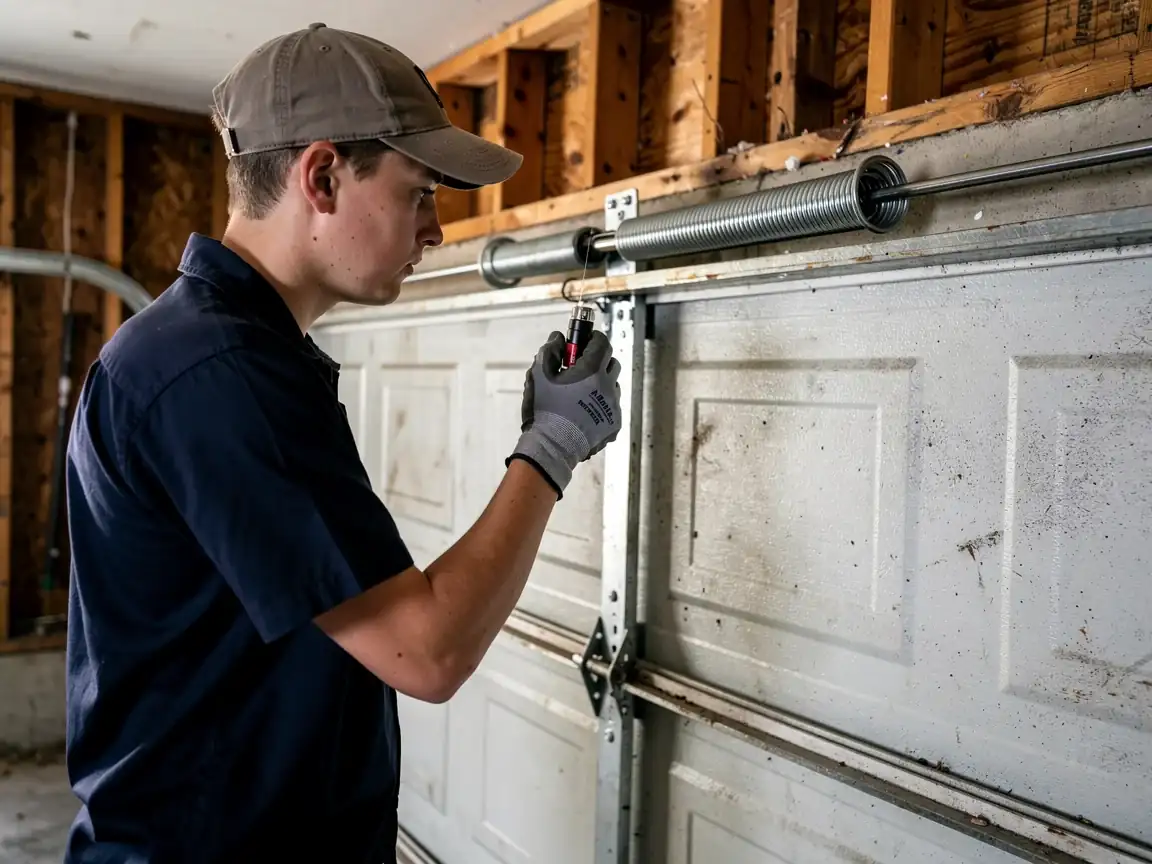
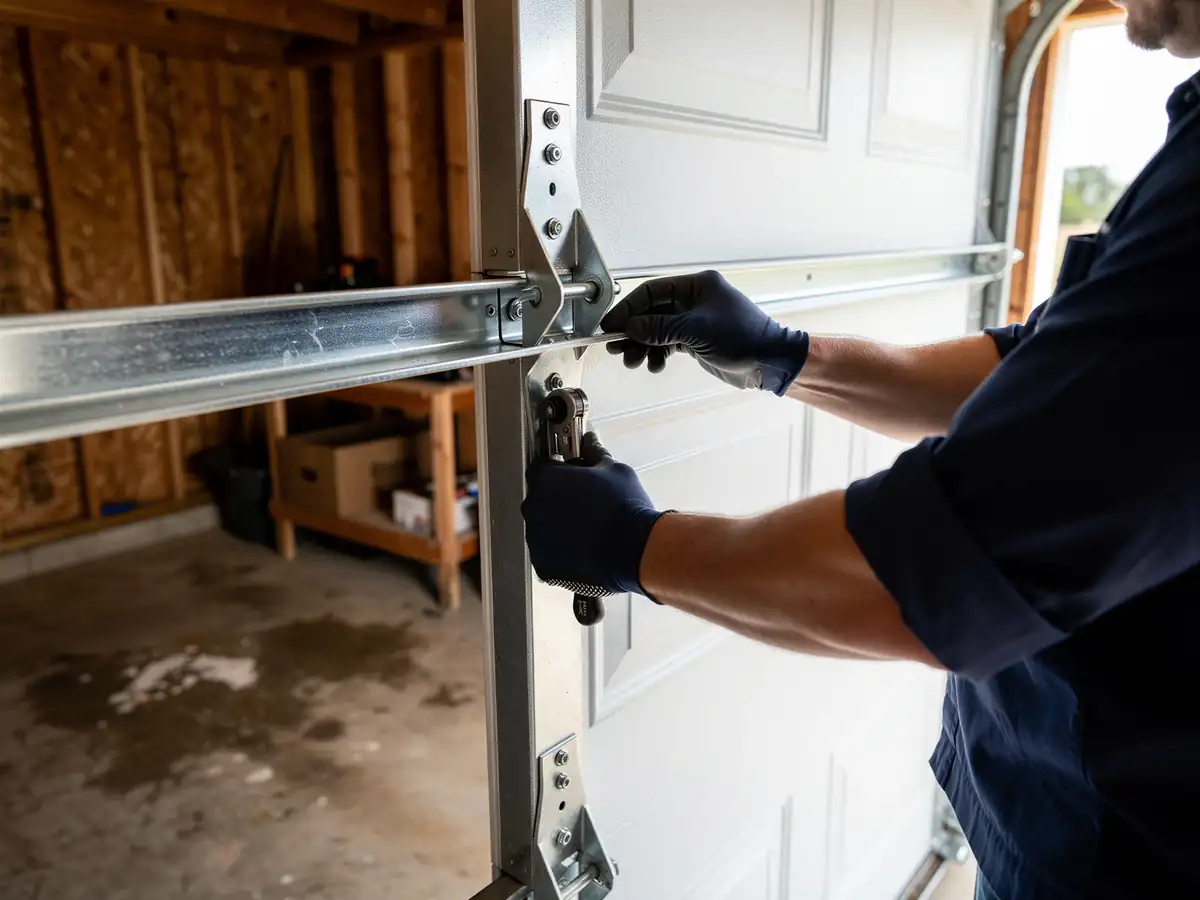
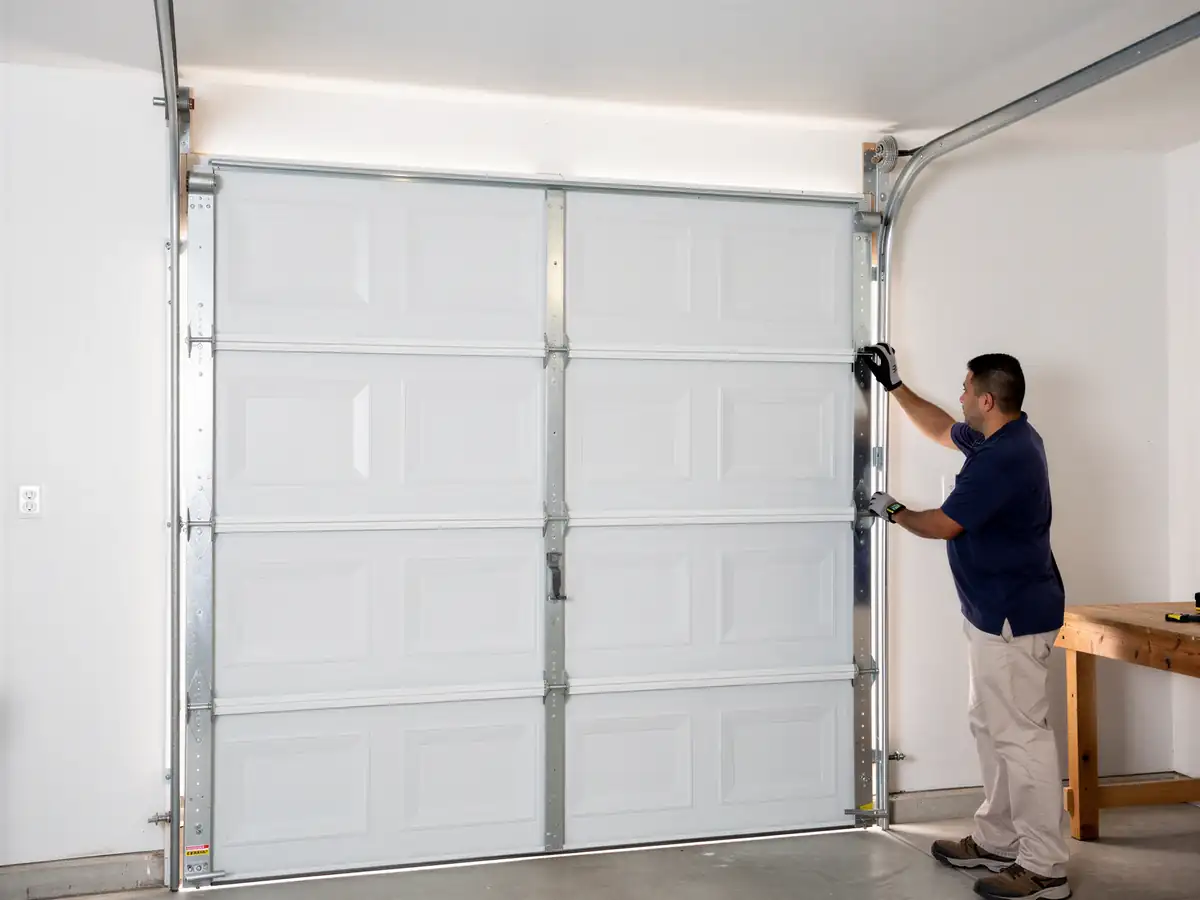
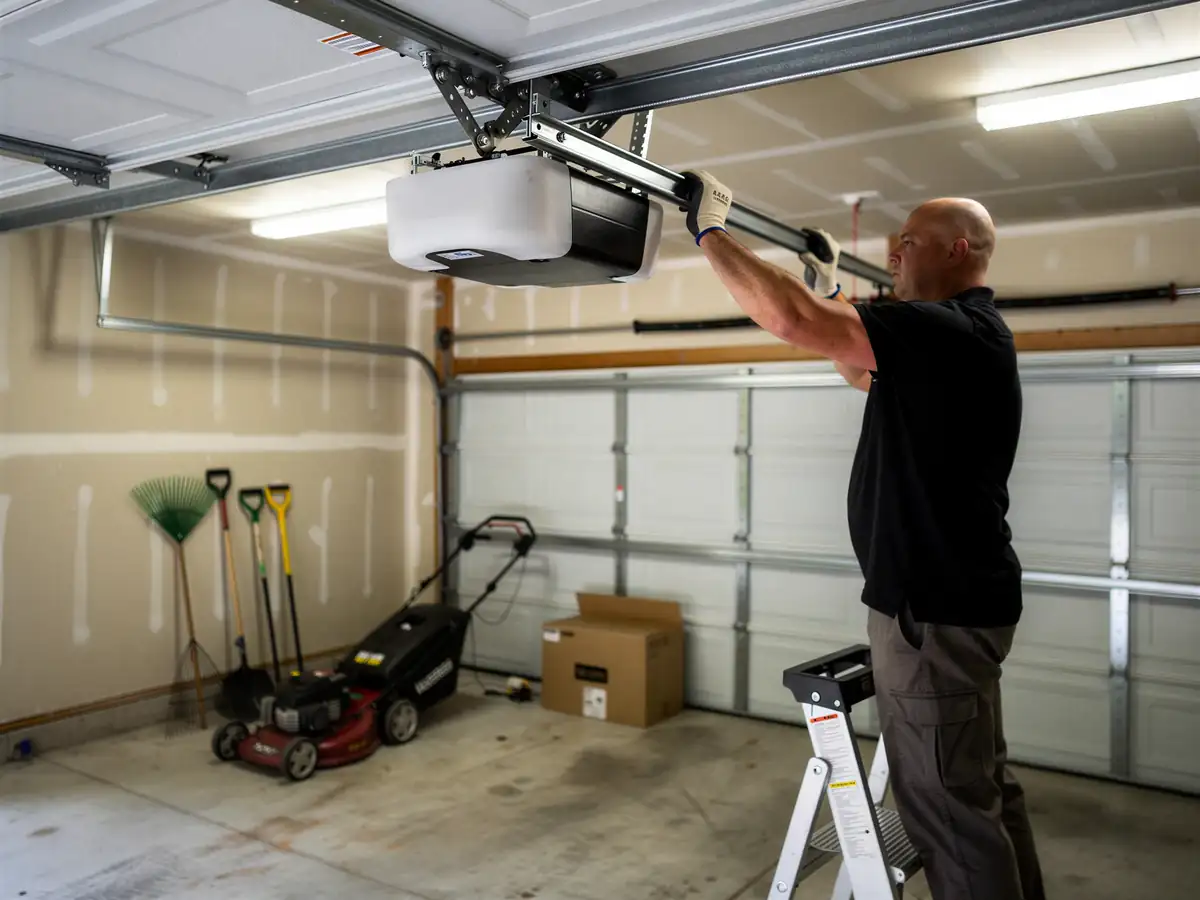
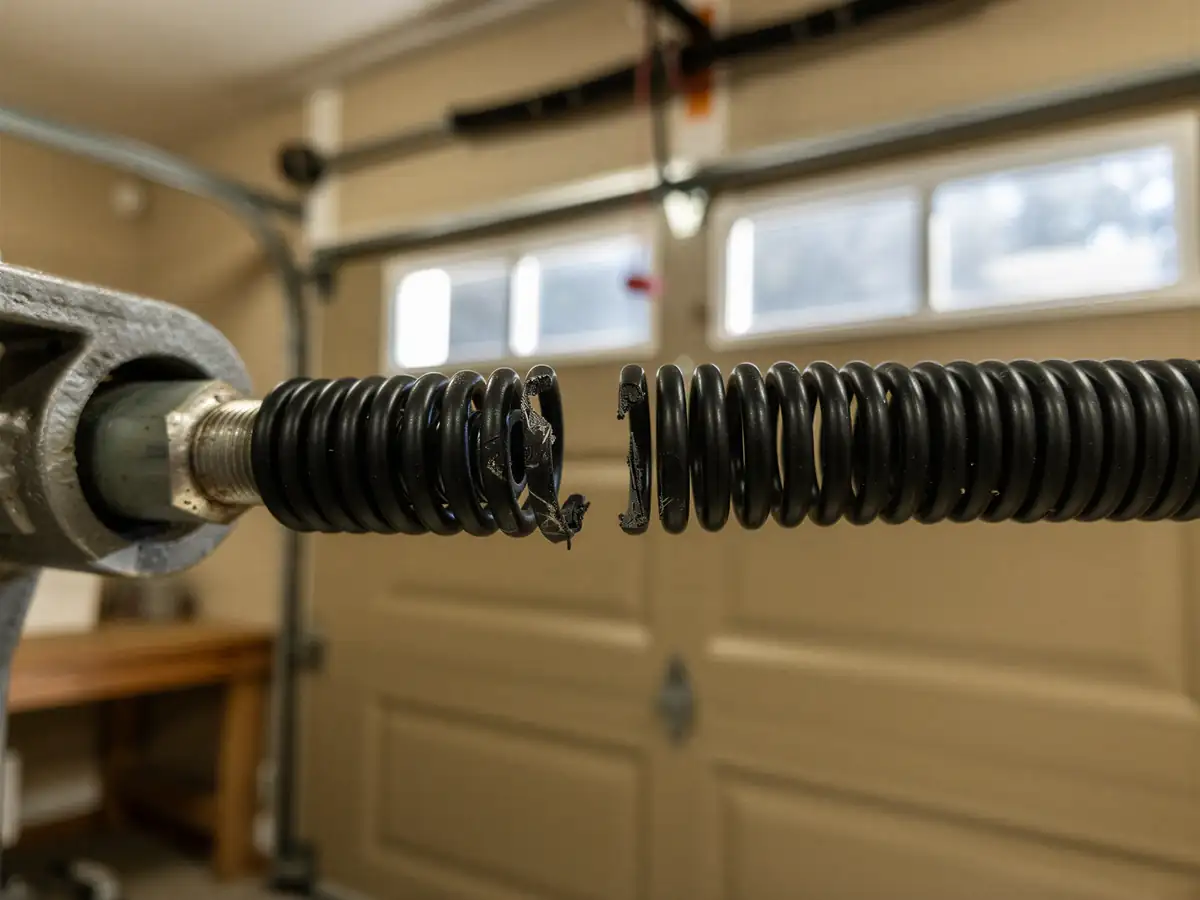
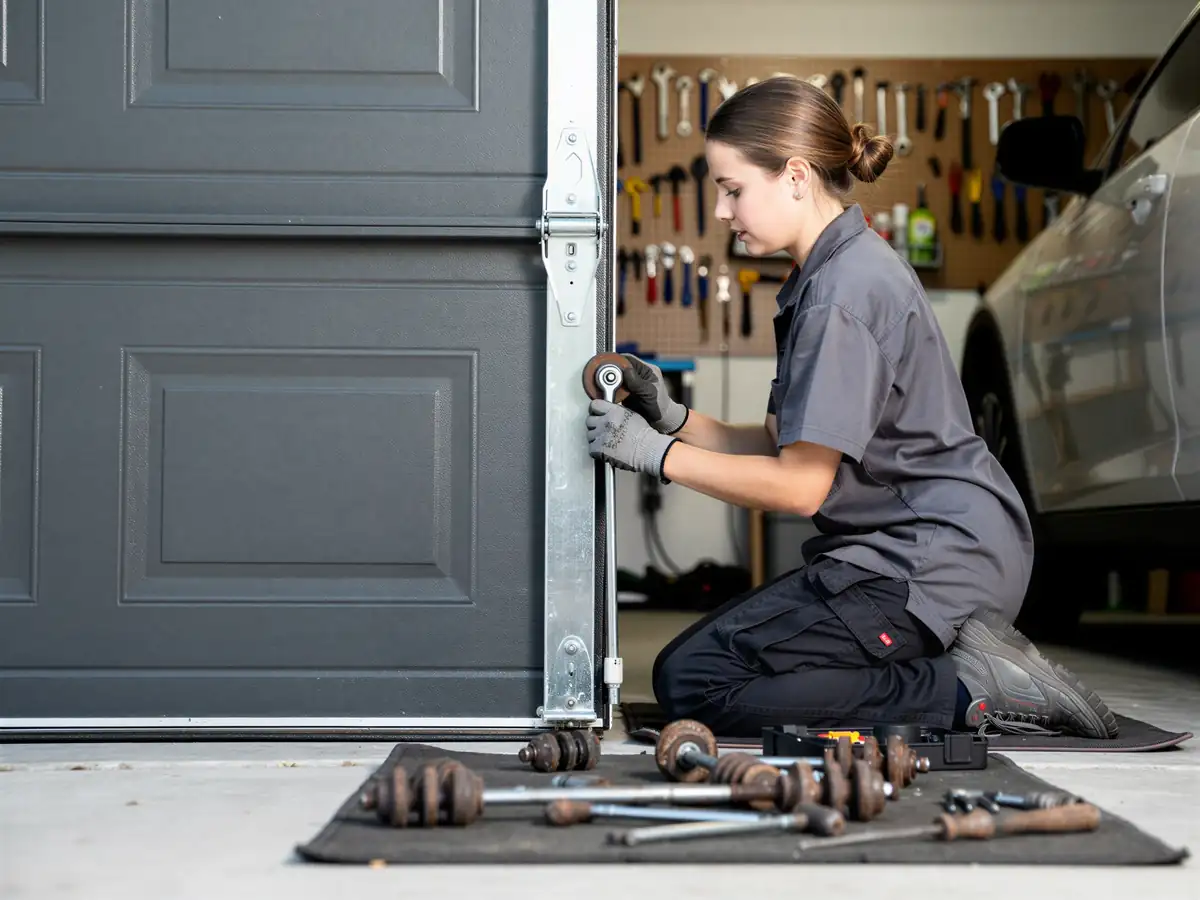
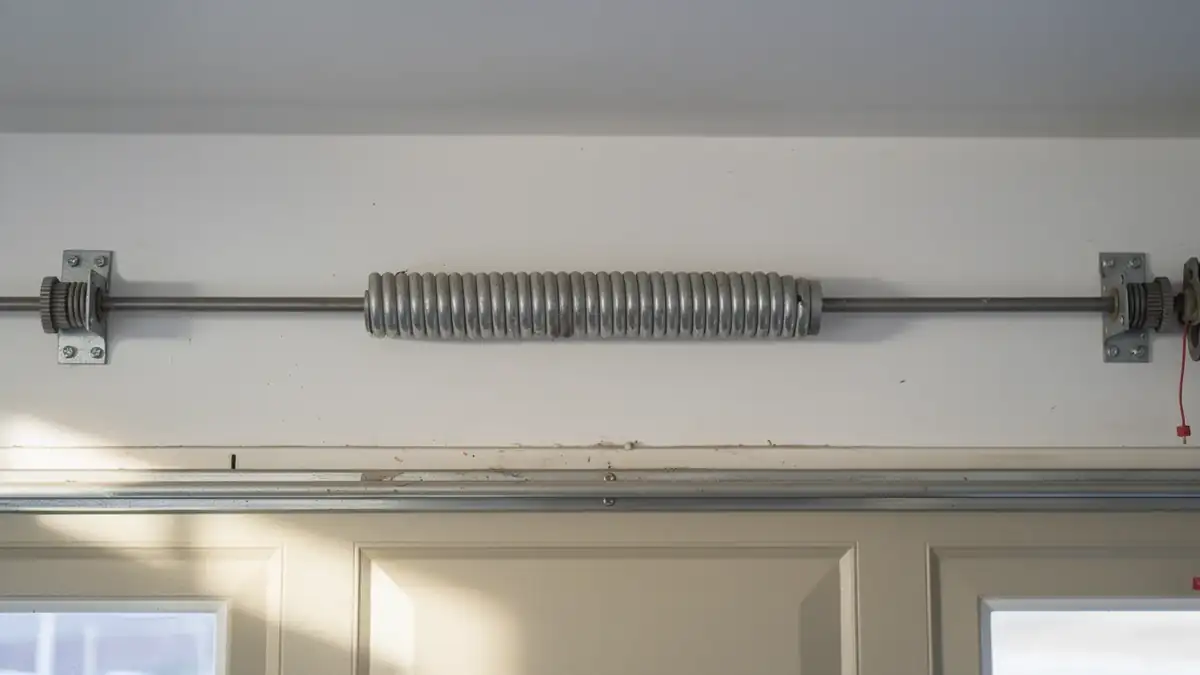
Before assuming it's the spring, look at the coil itself above the door - on these older torsion setups it sits on a shaft just above the opening. A broken spring usually shows a visible gap in the coil, sometimes with the two ends twisted apart. Check whether the door will lift by hand, slowly, with the opener disconnected. If it's dead weight and barely moves, that's a spring. If it lifts but drags or binds partway, you're looking at a track or roller problem instead, which is a different repair and a cheaper one. On houses from the 1960s and 70s stock that's common across this area, it's also worth checking the end bearing plates - after decades of Florida humidity they corrode faster than the spring itself does, and a stuck bearing plate can mimic a spring failure. Don't pull the torsion shaft apart yourself. The spring is wound under real tension and it's not a DIY fix - that's the one place where a trip to the hardware store does more harm than good.
What the Weather Here Does to It
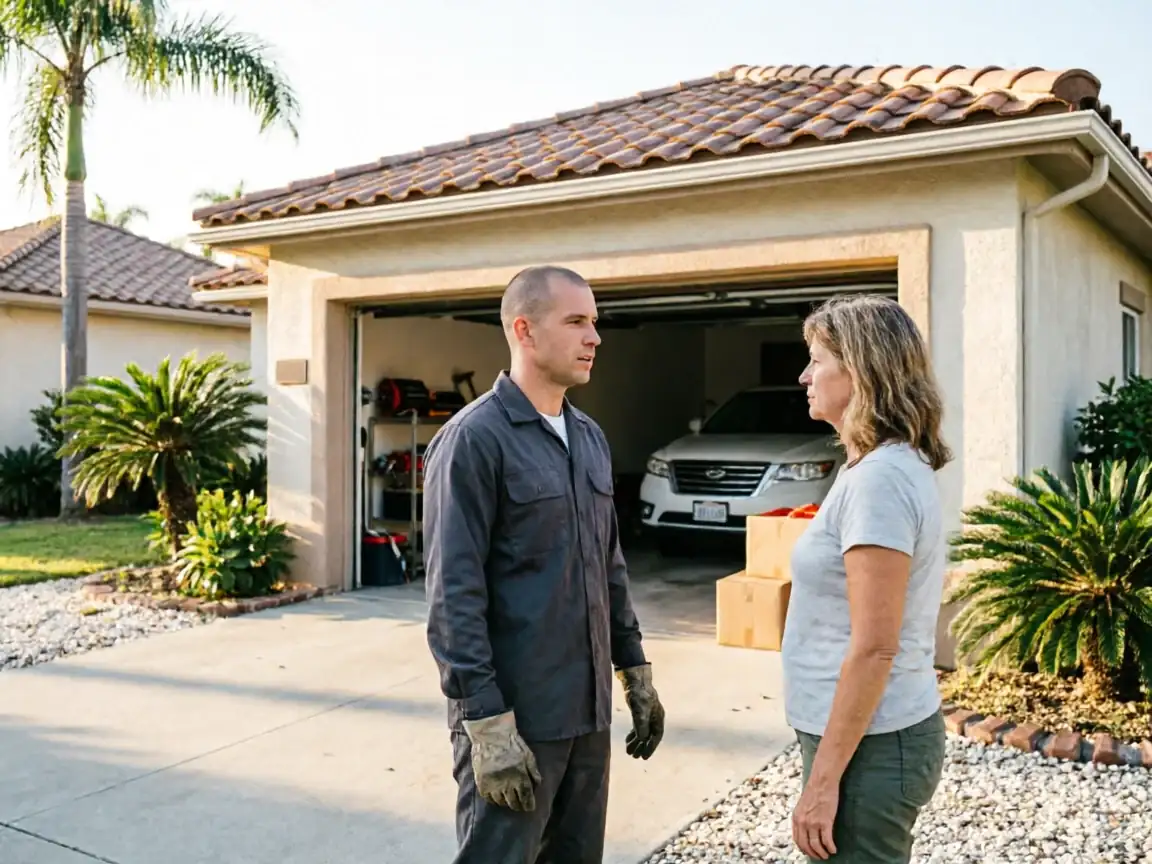
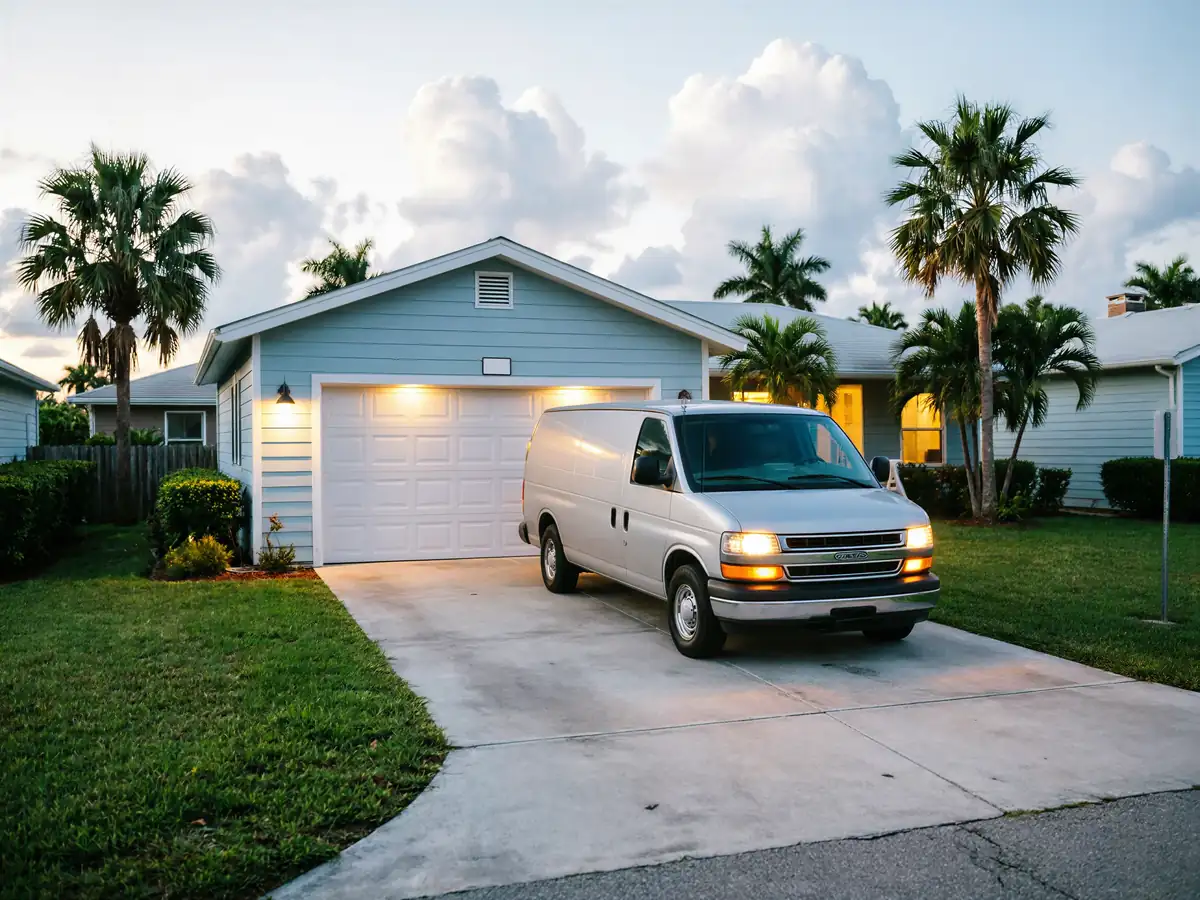
Plantation sits in a mild temperate band, not a freeze zone, so we don't get the hard winter failures you'd see further north where ice locks a track solid. What we do get is temperature swing - mornings in the 40s and 50s followed by afternoons back in the 70s, repeated through the cooler months. Metal contracts slightly in that cold snap, and a torsion spring that's already fatigued from 15, 20, 30 years of cycling loses a little more flex each time the temperature drops overnight. That's why spring failures cluster on those cold mornings here even though we never see a hard freeze: the spring was already near the end of its coil life, and the overnight contraction is just the trigger. It's not a cold-climate problem the way it is in Minnesota. It's an old-spring-meets-a-cool-morning problem, and on a lot of the pre-2005 housing stock in this service area, that spring has never been replaced.