How to Book
Call when the door won't move, a cable has jumped the drum
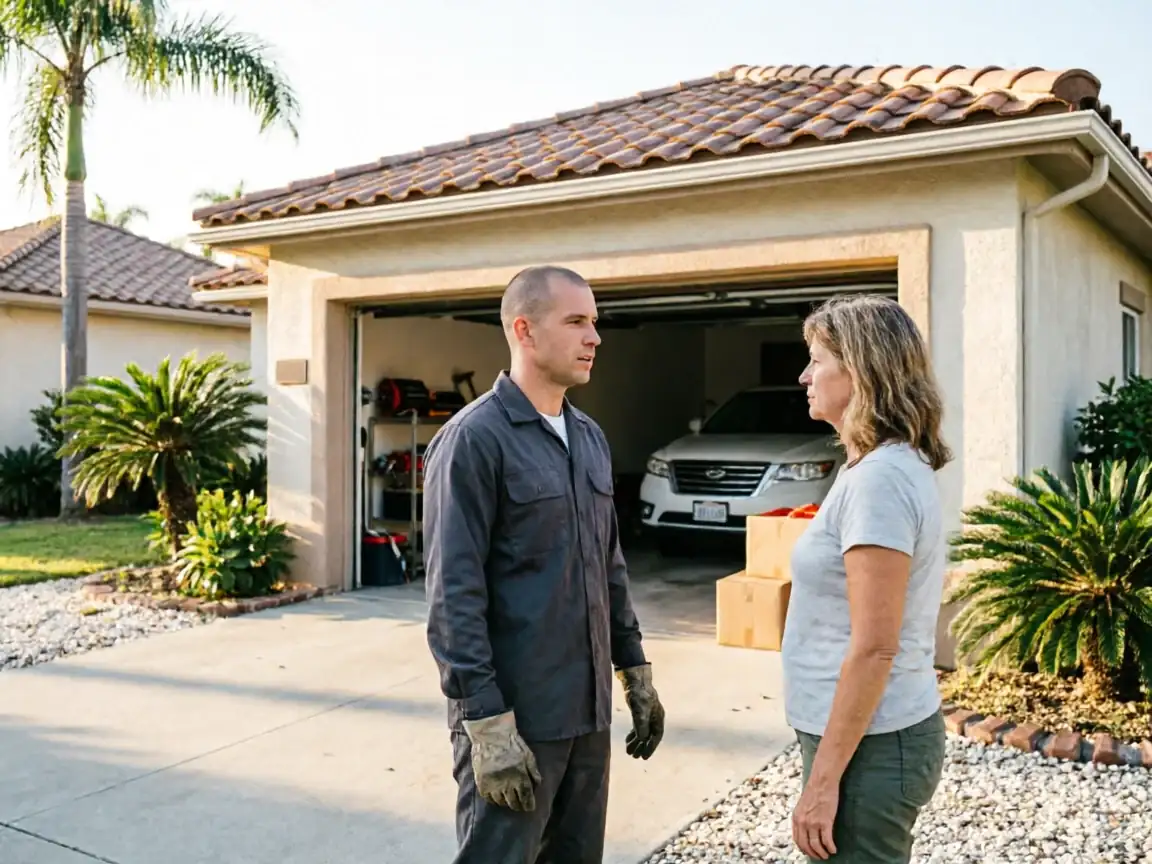
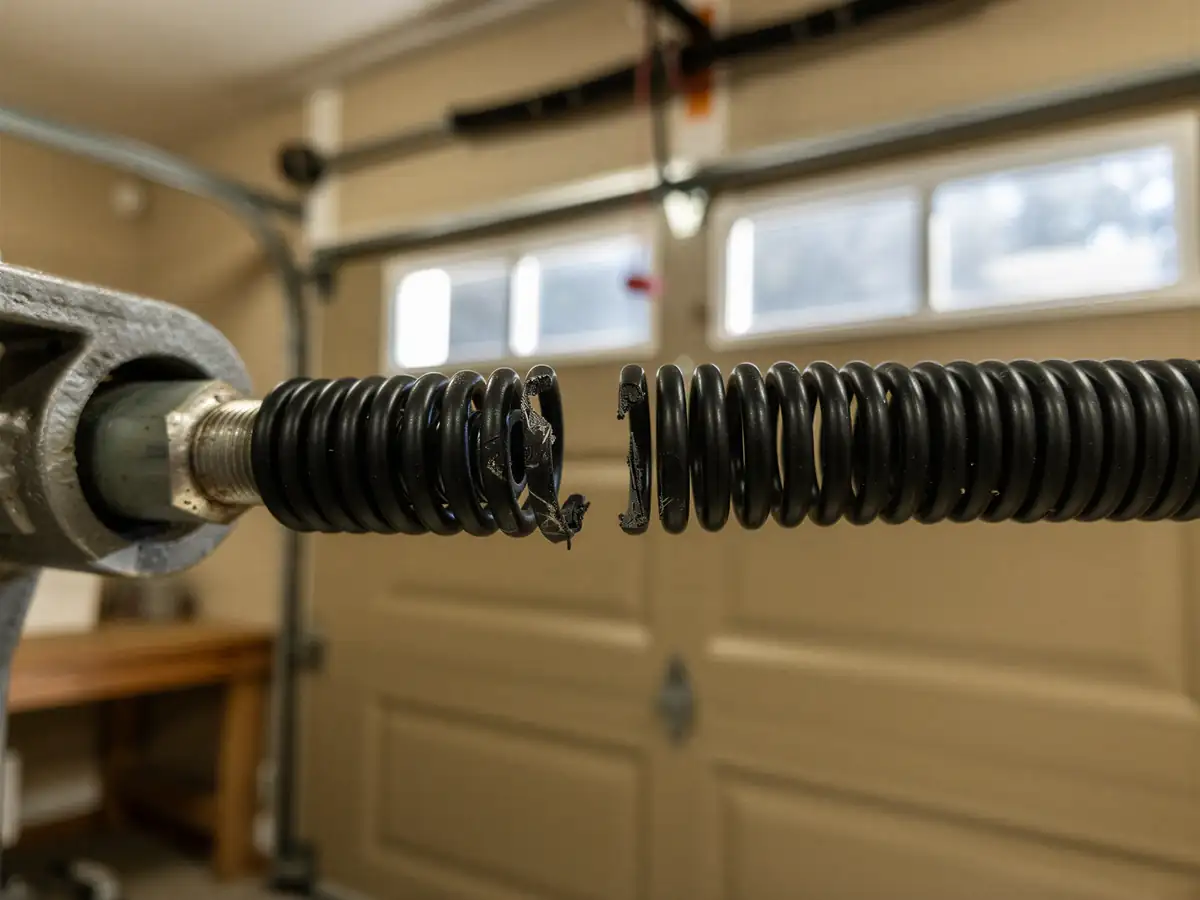
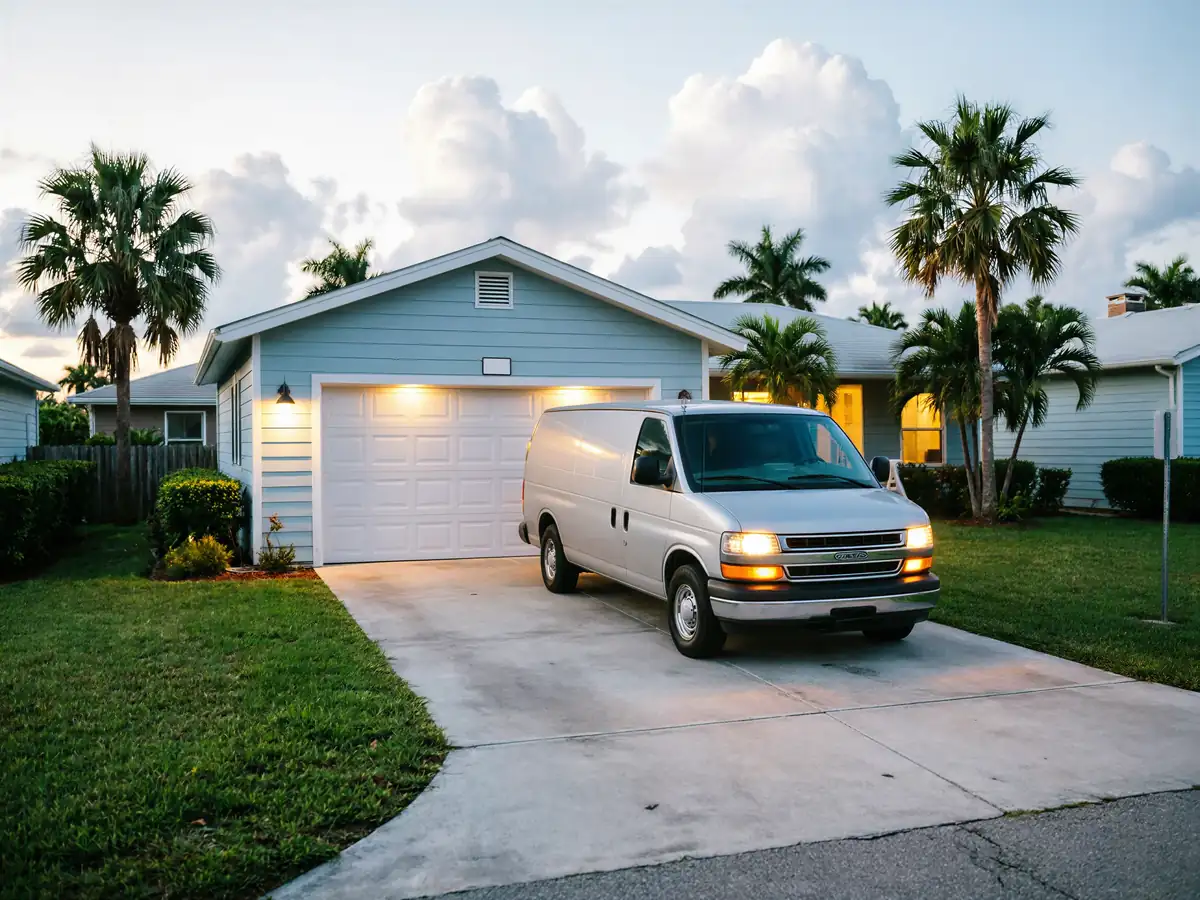
Or a spring has let go with that loud bang you felt through the wall. Tell us what you see and hear - whether the opener hums but the door stays put, or the door is cocked at an angle in the track - and we'll get a truck moving. We cover Plantation and the surrounding area out to places like Lauderhill, Tamarac, North Lauderdale, and Margate, so if you're calling from one of those towns, say so up front; it helps us route the closest truck.
Don't try to force the door up by hand if a spring has broken
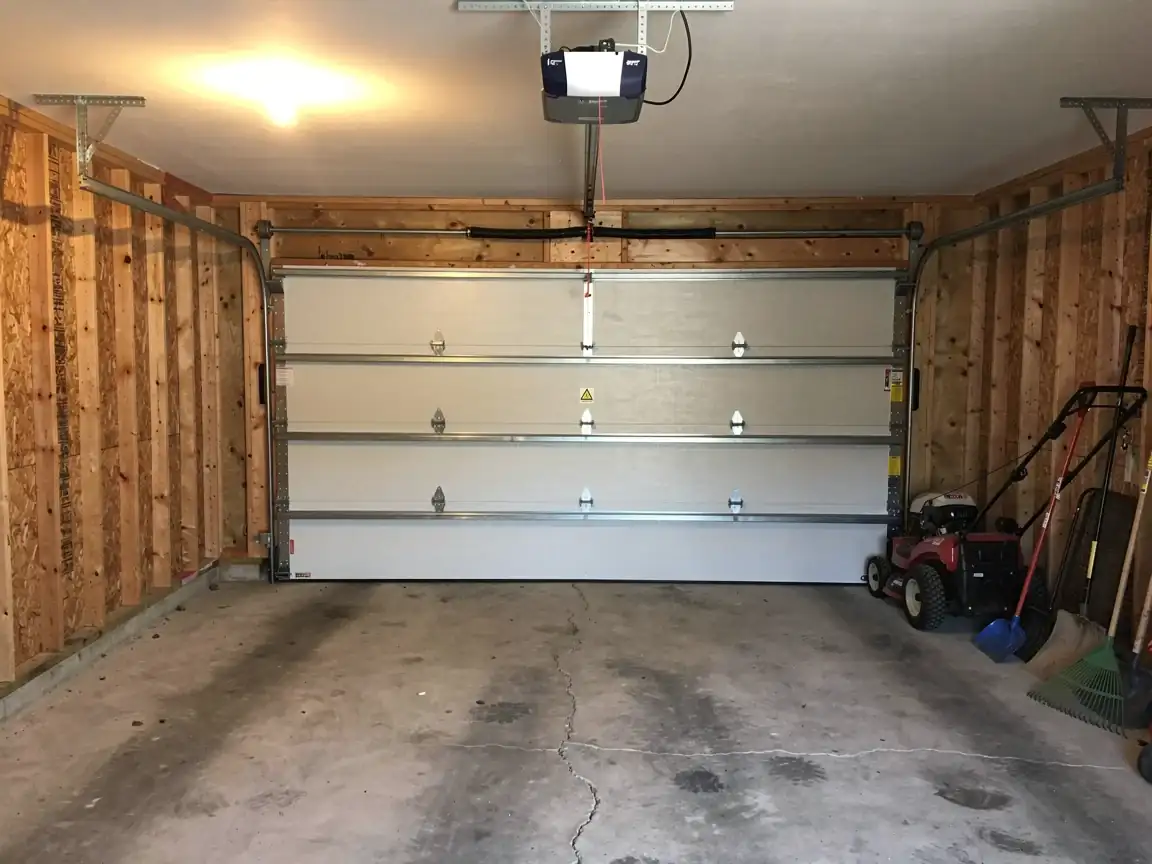
A double door with a snapped torsion spring can weigh well over a hundred pounds unsupported, and the only thing holding it is whatever's left of the cable and track. If the door is already partway open and something feels wrong when you touch it, leave it where it is and call.
We don't carry every part for every opener model on the truck
Some older chain-drive units and odd-sized torsion springs need a parts run, and we'll tell you straight if that's the case rather than guess at a fix on the spot.
The DIY Question
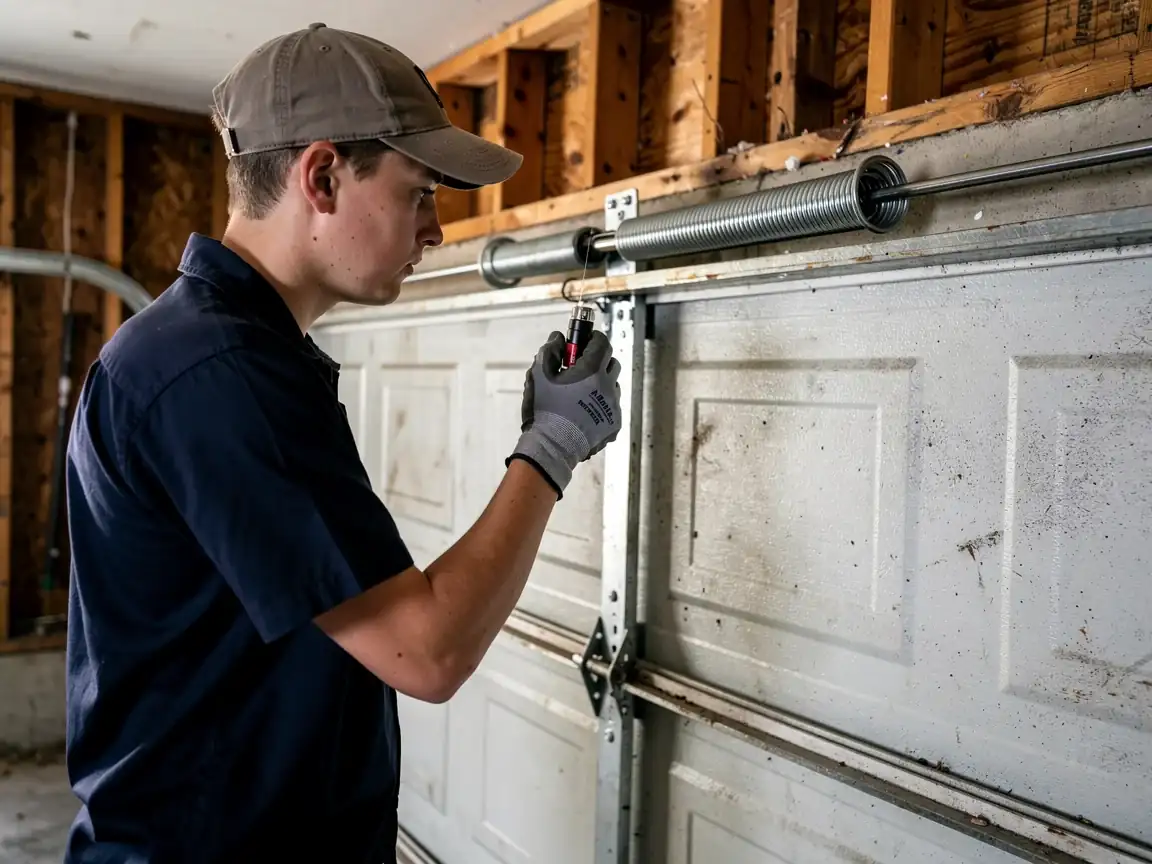
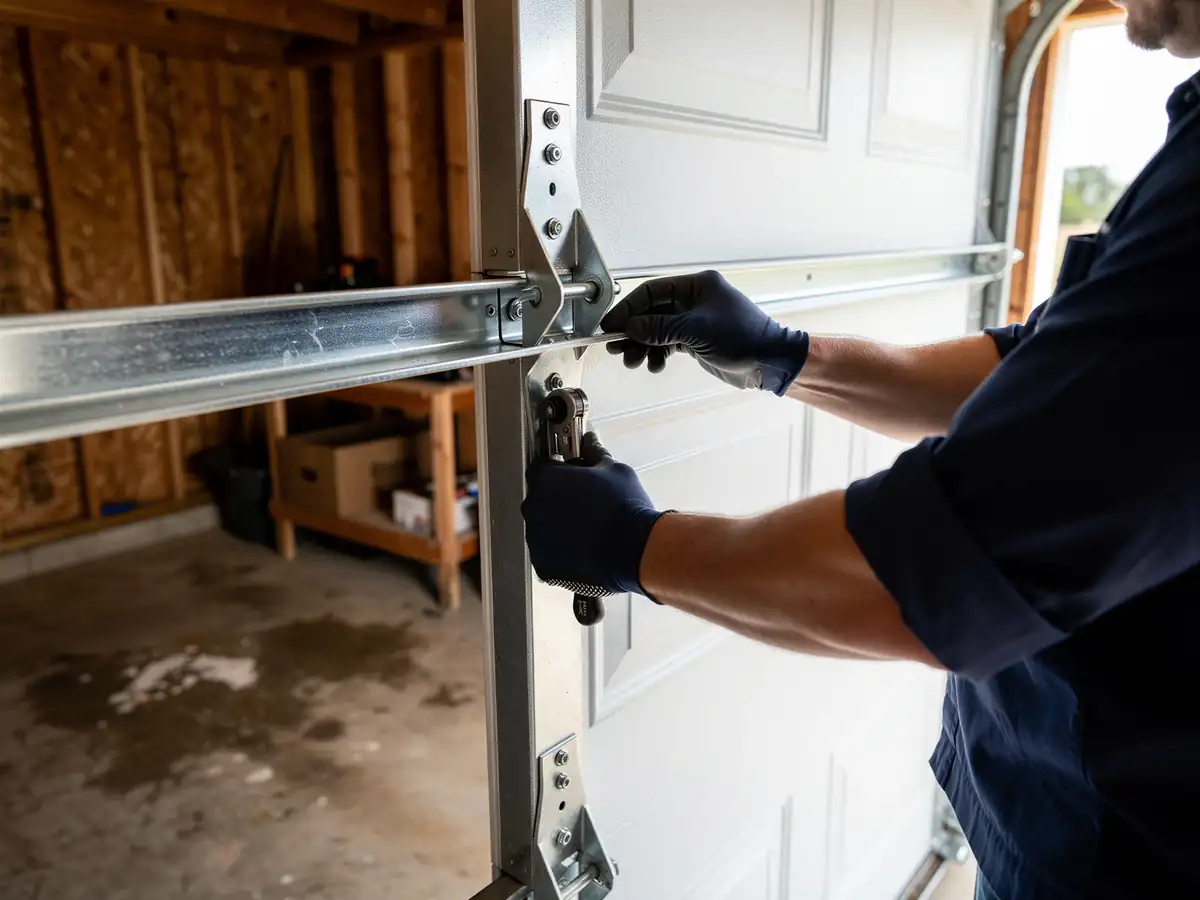
A spring you can watch us replace is not a spring you should replace yourself. Torsion springs are wound under several hundred pounds of tension, and the tools to wind and unwind them safely aren't something most garages have lying around. If the fix is a bent sensor bracket or a track that's knocked a few degrees out of line, that's a reasonable weekend job for someone comfortable with a drill and a level.
Where people get hurt, and where doors get worse, is springs, cables, and anything that involves taking tension off a wound torsion bar. We'd rather talk you out of a job on the phone than show up to a worse mess. If what you're facing is a stuck or noisy door and not a safety issue, we'll say so, and you can decide whether to wait for a scheduled visit instead of paying an emergency rate.
What You Are Seeing
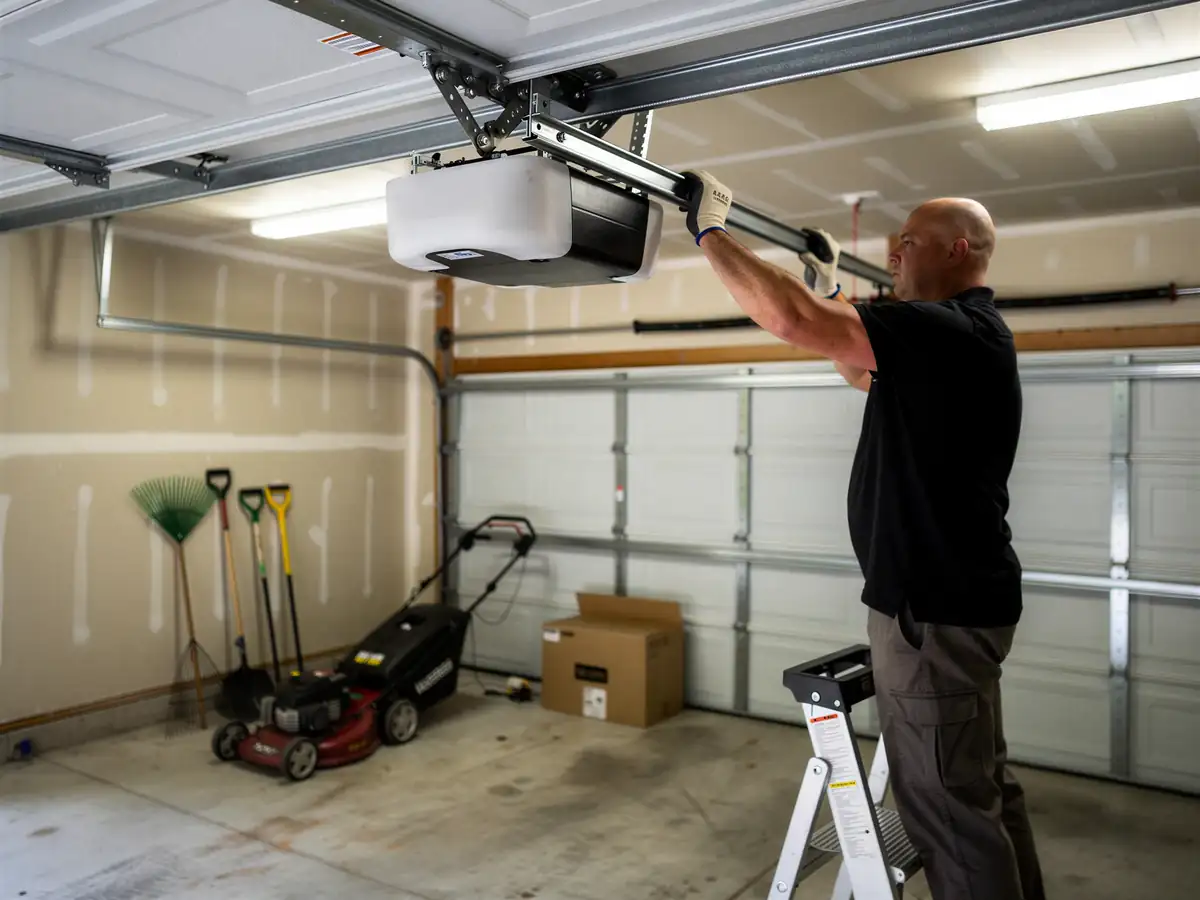
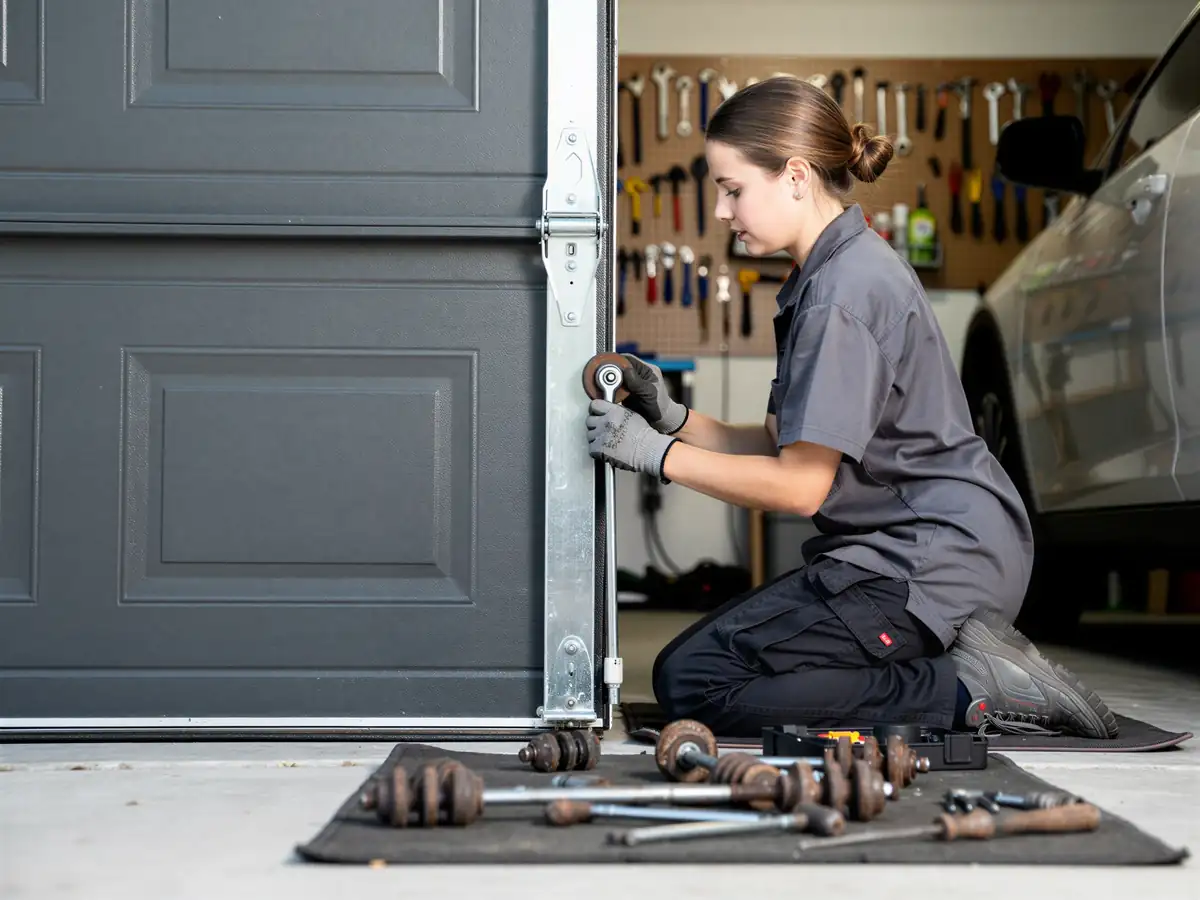
Most of the calls we get as true emergencies fall into a short list: a torsion spring that's split in two, a cable that's frayed through and come off the drum, rollers that have worn out of their track and let the door drop crooked, or an opener that's stripped its gear and just spins without lifting anything. Each one has a different sound and a different look, and knowing which one you have changes how fast it needs attention.
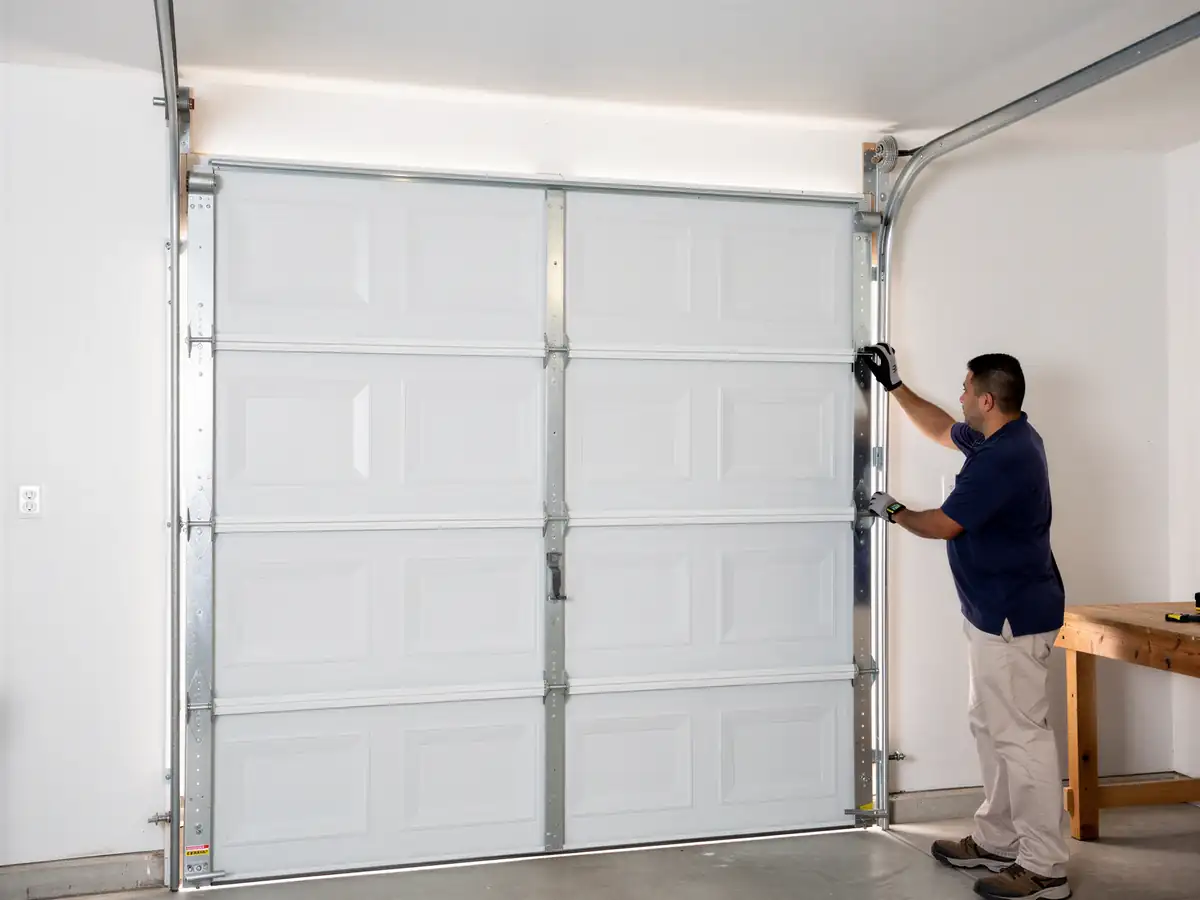
A split spring usually makes a bang loud enough to hear from inside the house, followed by a door that won't budge even with the opener running. A jumped cable tends to show up as a door hanging unevenly, tilted toward the side where the cable let go. Worn rollers grind and squeal before they finally jump the track, so if your door has been noisy for weeks, that's often the warning shot. None of these are cosmetic - a door that's off-track or hanging on one cable is under load it wasn't built to carry, and leaving it that way risks the track pulling off the wall.
Why This Fails Locally
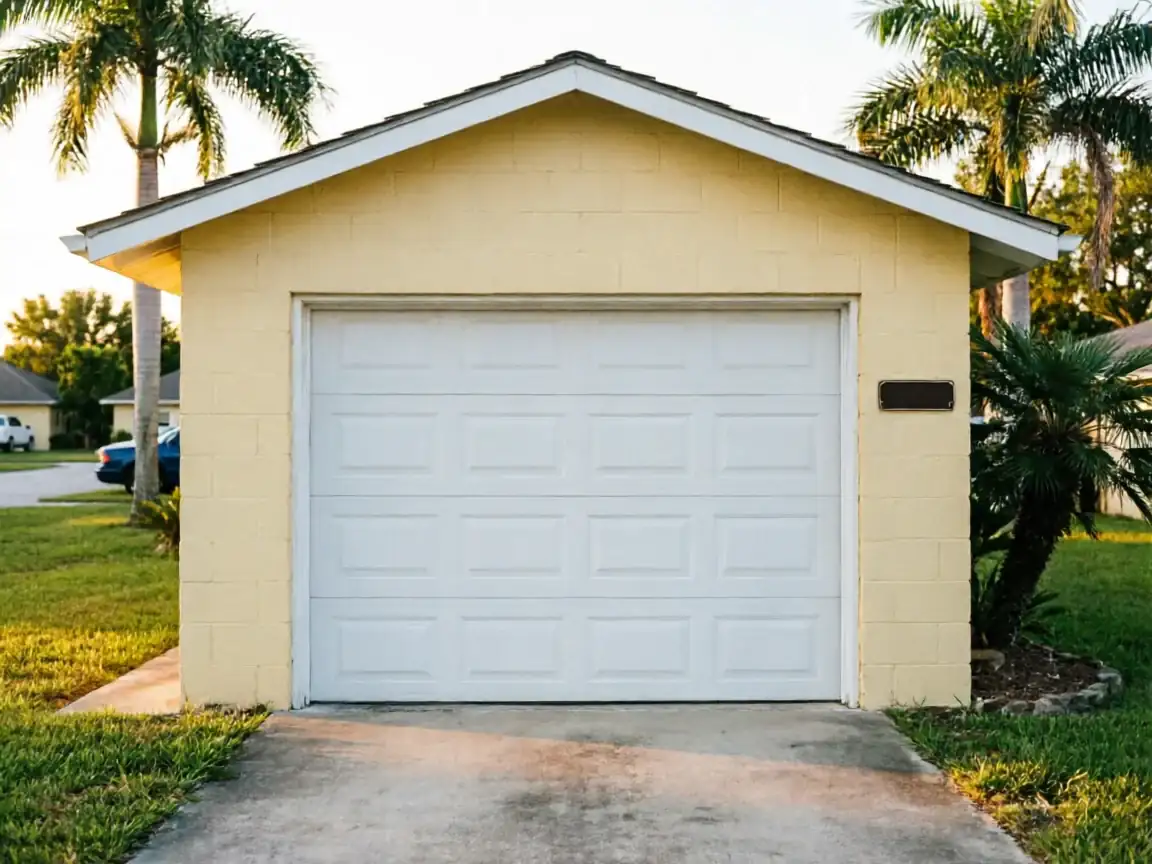
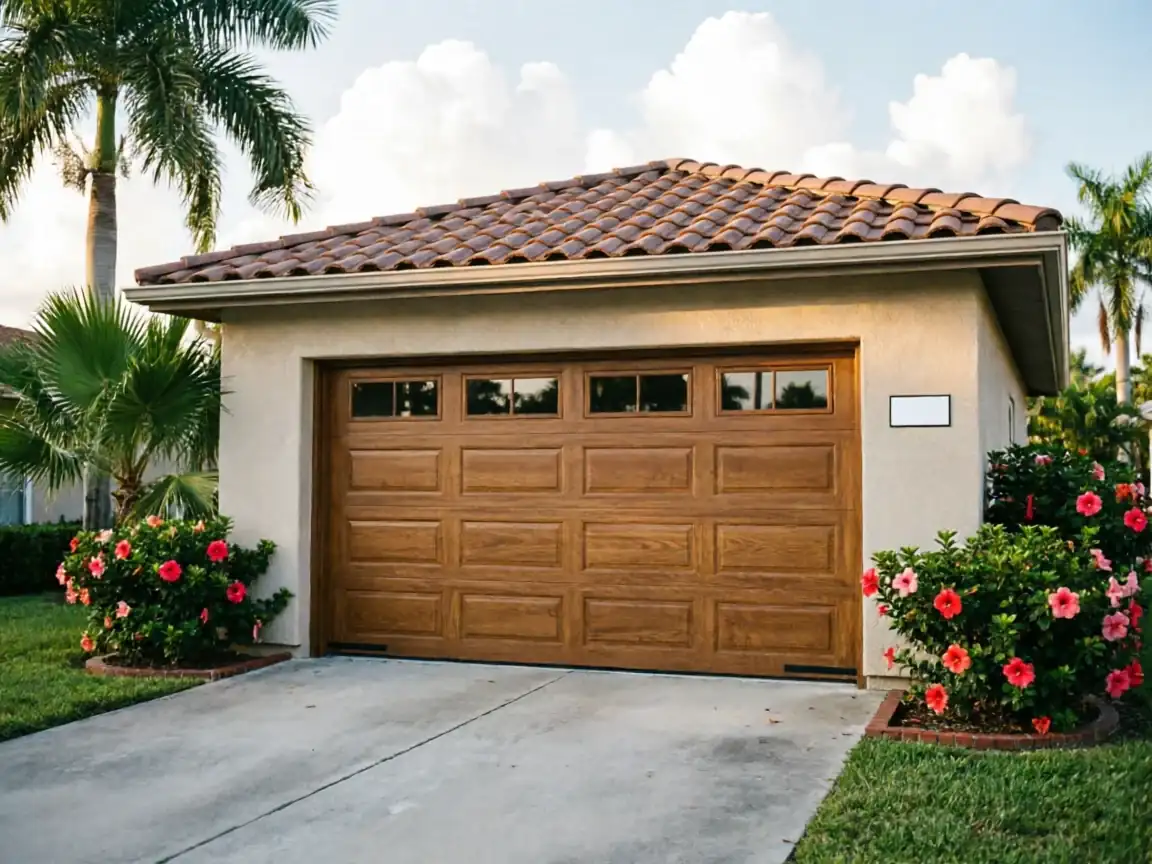
Housing across this service area was mostly built between 1953 and 1975
With the broader stock running through 2005, which means a lot of garages still have the original torsion hardware or a first-generation replacement from decades back. Springs have a rated cycle life, and a door installed when a house was new has had a long time to wear through several springs' worth of cycles, especially on a two-car door that gets used twice a day.
The climate here is mild, not harsh-winter
So we don't see the ice-jammed tracks or frozen openers that cause emergencies up north. What we do see is humidity and salt-tinged air doing slow, steady work on hardware - cables fraying at the drum, bearing plates rusting at the mounting bolts, galvanized springs losing their coating years before they'd fail inland. A door that looks fine on the outside can have a cable that's down to its last few strands, and in this kind of steady heat and moisture, that failure tends to come without much warning.